United States Quotes
If any person shall write, print, utter or publish, or shall cause or procure to be written, printed, uttered or publishing, or shall knowingly and willingly assist or aid in writing, printing, uttering or publishing any false, scandalous and malicious writing or writings against the government of the United States, or either house of the Congress of the United States, or the President of the United States, with intent to defame the said government, or either house of the said Congress, or the said President, or to bring them, or either of them, into contempt or disrepute; or to excite against them, or either or any of them, the hatred of the good people of the United States, … or to aid, encourage or abet any hostile designs of any foreign nation against the United States, their people or government, then such person, being thereof convicted before any court of the United States having jurisdiction thereof, shall be punished by a fine not exceeding two thousand dollars, and by imprisonment not exceeding two years
This law, passed by the President John Adams and the Federalists, became the political factor around which Thomas Jefferson, James Madison and others were to create the Democratic Republicans who not only ousted the Federalists but beat them so badly that the party disappeared and the Whig Party evolved. Under this law a person who criticized any facet of the Government publicly could be fined and imprisoned. The Act was unconstitutional but at that early stage of America, there were no Supreme Court precedents to go by and the power of the courts to nullify a law of Congress was not even clear. So it was never tested in the courts but finally was repealed.
United States, Sedition Act, July 14, 1798
Sourced by: Eigen's Political and Historical Quotations

This law would certainly be held unconstitutional today but at the time it wasn’t even clear that the Supreme Court could nullify a law of Congress. Virginia and Kentucky both passed resolutions however, protesting the law and challenging its constitutionality. The $2,000 maximum fine was huge for the day—the equivalent of more than $1 million today. The reason was that one of the major targets of the law was wealthy printers and publishers, who could be impoverished for a violation. The Sedition Act was in existence until Jefferson ousted the Federalists who passed it (John Adams signed it) and pardoned all those who had been convicted under the law. The Sedition Act is used today as evidence that the Founding Fathers really did not intend that the First Amendment protect speech that is potentially harmful to the country. The counter argument is that the Sedition Act was passed by John Adams and his allies at a particularly vulnerable time in America’s early history. And it was one of the biggest reasons that Adams and the Federalists were defeated after a single term by Thomas Jefferson and the Democrats. The Federalists were so badly beaten that their entire political party was destroyed. The Whig Party evolved as the opposition Party to Jefferson and the Democrats.

Although it seems incredible to us today, thousands of people were arrested and prosecuted under the Espionage Act. The government particularly targeted leftists such as Eugene V. Debs, Bill Haywood, J. Philip Randolph, Victor Berger, John Reed, Max Eastman, and Emma Goldman. Debs was sentenced to 20 years in prison for criticizing the Act itself.

Commonly referred to as the Kentucky Resolution.

First amendment protect speech and publication even if it is slanderous or libelous as long as the subject is a public figure or public official and the falsehoods or errors are not malicious.


She was commenting on a suggestion that a Twitter User had made that any individual who felt he/she was being harassed by insulting Twitter messages, could have Twitter delete the offending content. Some of the Twitter campaigns against an individual has been gross, indecent, cruel and for the most part untrue. Hence the request. The person who perceived that he/she was being harassed was free to bring a lawsuit against the sender for defamation if the material is untrue and the person is not a Public Figure. The latter have no general right of redress in the courts.

Berger, an elected Congressman, was denied his seat after he had written an editorial against the First World War {587982} and been convicted under the then existing law. The House vote was 311 to 1. The 1 was Voigt. Berger was re-elected again anyway. Finally, the Supreme Court overturned his conviction and the House seated Burger. The one had been right; the 311, wrong.


A critical difference between English and American law is that truth is an absolute defense in the U. S. but is not in Great Britain. In the case of public figures, "the great," even truth is not required in U. S. law. It is not against American law to slander public figures as long as it is not malicious.


The libel and slander laws in England were then, and are today, dramatically different from those of the United States in two fundamental ways: In America truth is an absolute defense; in England you can’t say true things about people which are personally libelous. Second, in America politicians and public figures are not entitled to a verdict even if the statements are inadvertently or possibly false. Without the Constitutional protections of freedom of speech and freedom of the press, the reputations of people including public figures are given much more weight in England than in America.
This quotation is typical of many constitutions in the sense that one part of the Constitution guarantees political freedom for all citizens and another part then makes so many exceptions that there are no guaranteed rights other than those the government wishes to give at any point of time. In this particular Constitution Article 10 does both, one right after the other. So Clause 1 gives the rights and Clause 2 explains how they can be taken away. For example, in 2008 university students were not allowed to join political parties.

In WWI Congress had passed a law that prohibited anyone from undermining or interfering with the war effort. The defendants had passed out anti-war literature to young men heading for military service. The court then overlooked the First Amendment and came up with a strange logic where the “clear and present danger” was the test of whether the First Amendment would apply. The anti war pamphleteers went to jail. Today, we look back on this and find it very surprising but this is yet another example of erosion of freedom and civil liberties when the nation is at war. By the 1950s, the Supreme Court had reversed itself and the First Amendment was restored to its original intent.

Originally it was published in Boston under the name “A Columbian Patriot.” This was written before the Bill of Rights had been added. Criticism like this led to their addition by Congress in order to obtain ratification.

Usually Jefferson was the strongest voice for rights with no loopholes. However, he wanted to have a slander exception as this quote shows. However, the issue is what happens if a government official or an agency believed that it has been falsely slandered? If Jefferson’s proposal was accepted completely, the government and officials could sue someone who published negative information that they thought was false. Our supreme court has limited the exception to private parties who were NOT “public figures” unless the publisher knew the information was false and proceeded anyway for malicious reasons.
England and most other countries do not have such an exception and the press is very timid about criticizing the government or officials lest they make a mistake .
The word “printer” had a slightly different meaning then. In Jefferson’s time the printer was also the publisher, Benjamin Franklin was known as a printer but he not only published material but wrote much of it himself. This was typical. So Jefferson is concerned with the rights of the printer, the publisher and the writer.
The book was very critical of the way capitol punishment is meted out in Singapore. The Singapore Attorney General’s Office then claimed that the book had brought disrespect on the courts of Singapore by being so critical and tried him for “criminal defamation”. Shadrake was fined $30,000 and when he planned on publishing a second edition he was tried again and threatened with Jail. The fundamental problem is that if part of a nation’s government is corrupt, ineffective or incompetent and someone tells that to the public, there will certainly be less respect for the institution. So demanding respect, is tantamount to abandoning freedom of speech in general and criticism of the government in particular,


Samuel Langhorne Clemens, 1835-1910. Grant was the victim of more journalistic errors than most politicians as a number of his appointees turned out to abuse their position for their own gain. Often, Democratic leaning newspapers would claim the Grant was aware of the corruption, sharing in it or both, When there was later proof of Grant’s non involvement, most newspapers would never publish a retraction of correction.
This principle was incorporated into American law by the Supreme Court 1964 decision in Sullivan v. New York Times, where this argument drove the opinion.


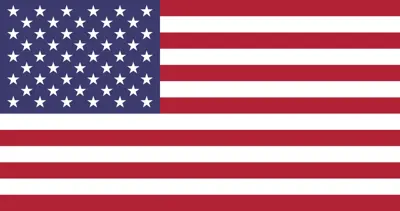
The United States of America (USA), commonly referred to as the United States (U.S.) or America, is a country composed of 50 states, a federal district, five major self-governing territories, and various possessions. The 48 contiguous states and federal district are in central North America between Canada and Mexico, with the state of Alaska in the northwestern part of North America and the state of Hawaii comprising an archipelago in the mid-Pacific. The territories are scattered about the Pacific Ocean and the Caribbean Sea. At 3.8 million square miles (9.8 million km2) and with over 324 million people, the United States is the world's third largest country by total area (and fourth largest by land area) and the third most populous. It is one of the world's most ethnically diverse and multicultural nations, the product of large-scale immigration from many other countries.
