Vermont Quotes
Private property ought to be subservient to public uses, when necessity requires it; nevertheless, whenever any particular man's property is taken for the use of the public, the owner ought to receive an equivalent in money
Vermont, Constitution, July 4, 1786
Sourced by: Eigen's Political and Historical Quotations


Sealed under duress and later repudiated by the King with Papal assistance. This, before Magna Carta, was a common occurrence especially by the military. In many countries, even in modern times, this restriction does not exist. The resentment developed from this practice was a major factor in the Chinese people turning in the Nationalist government in favor of the Communists after WWII. Mao Tse-Tung's soldiers always paid for what they took or used if not donated freely. Not so Chiang's military." John Lackland

While this principle is widely accepted in modern America, in the early 20th century this was a view considered radical, socialist and even communistic by many of the leading businessmen in the nation. For a president to utter these words, much less a Republican President of a rich, upper class background.

Sealed under duress and later repudiated by the King with Papal assistance. This clause was particularly interesting in that almost all freedoms have expanded from the Magna Carta in modern democracies. However in this one there was an absolute direct prohibition against the King—the State—taking private property without the owners consent. In modern democracies the right is not as strong as the original. The state, if it needs the property, wood or whatever, and the owner refuses to give it or sell it to the state, the government can condemn the property but must pay the owner the fair market value of the property seized. As a practical matter, the kings of England paid little or no heed to this clause. One of the sources of conflict between the English Royal Navy and the American Colonists was the practice of Naval agents finding tall straight trees, good for the main mast of a ship, and marking it thereby prohibiting the property owner of cutting down that tree until the Crown sent a crew to fell the tree and take it for ship building. They paid no attention to Aticle 31 whatsoever.


The Catholic view on the subject varied from time to time, even with the same Pope. See {360616} for another quote from this Pope that gives a different point of view.


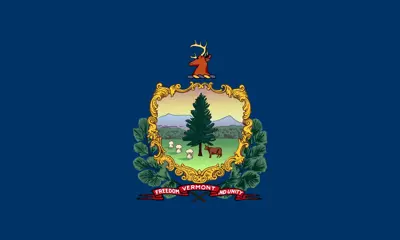
Vermont (/vərˈmɒnt/ (listen)) is a state in the New England region of the United States. It borders the states of Massachusetts to the south, New Hampshire to the east, and New York to the west, and the Canadian province of Quebec to the north. Vermont is the only state in New England that does not border the Atlantic Ocean. Vermont is the second-least-populated U.S. state and the sixth-smallest by area of the 50 U.S. states. The state capital is Montpelier, the least-populous state capital in the United States. The most-populous city, Burlington, is the least-populous city to be the most-populous city in a state.
