John Locke Quotes
Private interests often keep up Customs and Privileges, when the reasons of them are ceased
John Locke, 1632-1704, English Political Philosopher, Second Treatise on Government, 1689
Sourced by: Eigen's Political and Historical Quotations


Although Rand is one of the Conservatives' favorite writers and philosophers, only a minority would agree with her unfeeling and extreme form of a capitalistic society.

Scott was the leading military man of the day.


At the time the Puerto Rican right wing distrusted the United States as too accommodating to labor, and the leftists saw American progressivism as a way of building an alliance between Puerto Rican and American labor movements.


Many Irish use the term “race” in a cultural sense. To them, the Irish are a different race from the English or the Italians.

The United States money was then on the Gold Standard. The country was growing and needed more money in circulation. But most of the gold that might be available was in England and English bankers could control much of the U. S. economy. The Populists and the Democrats wanted us to use silver to back U. S. money as there was plenty of silver in the United States. The Republicans would not relent and depression was upon the country. A half century later, it would be Republican President Richard M. Nixon, who took the United States off the gold standard. Lease was far ahead of her time.


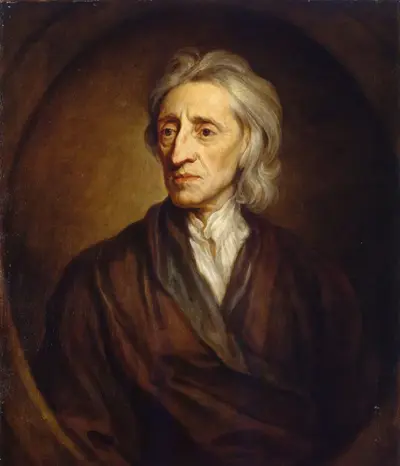
John Locke FRS was an English philosopher and physician, widely regarded as one of the most influential of Enlightenment thinkers and commonly known as the "Father of Liberalism". Considered one of the first of the British empiricists, following the tradition of Sir Francis Bacon, Locke is equally important to social contract theory. His work greatly affected the development of epistemology and political philosophy. His writings influenced Voltaire and Jean-Jacques Rousseau, and many Scottish Enlightenment thinkers, as well as the American Revolutionaries. His contributions to classical republicanism and liberal theory are reflected in the United States Declaration of Independence.
