Arthur Schopenhauer Quotes
Pride is an established conviction of one’s own paramount worth in some particular respect, while vanity is the desire of rousing such a conviction in others, and it is generally accompanied by the secret hope of ultimately coming to the same conviction oneself. Pride works from within; it is the direct appreciation of oneself. Vanity is the desire to arrive at this appreciation indirectly, from without.
Arthur Schopenhauer, 1788-1860, German Philosopher, Aphorisms on the Wisdom of Life
Sourced by: Eigen's Political and Historical Quotations


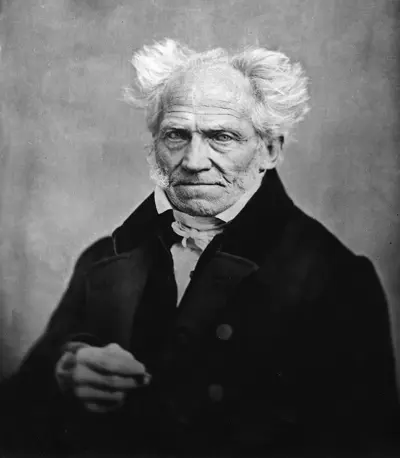
Arthur Schopenhauer was a German philosopher. He is best known for his 1818 work The World as Will and Representation (expanded in 1844), which characterizes the phenomenal world as the product of a blind and insatiable noumenal will. Building on the transcendental idealism of Immanuel Kant, Schopenhauer developed an atheistic metaphysical and ethical system that rejected the contemporaneous ideas of German idealism. He was among the first thinkers in Western philosophy to share and affirm significant tenets of Indian philosophy, such as asceticism, denial of the self, and the notion of the world-as-appearance. His work has been described as an exemplary manifestation of philosophical pessimism.
