Mark Twain Quotes
Presbyterianism without infant damnation would be like the dog on the train that couldn't be identified because it had lost its tag.
Twain, Mark. Mark Twain's Autobiography. Harper & Brothers, 1924.


Official List of groups which were prohibited from religiously criticizing the Catholic Church—the established church of Maryland. One interesting observation is that the Jesuits—a Catholic order were on this list. Catholic orders did not then subject their representatives to the authority of the local bishops and took direction only from the Pope. In the case of the Jesuits at the time, there were many who believed the Jesuits were beyond the de facto control of the Papacy and some Jesuits thought they should be—thus the two designations of Jesuits. This makes clear the fundamental intolerance that was common on many parts of Colonial America, that criticism of and heresy to the Established Church was not to be permitted. To the orthodox Catholics of Maryland, they were as concerned with the potential criticisms of Catholic Jesuits as they were with those of Puritans or Anabaptists. Compare Maryland, a Catholic colony with a huge antipathy towards Puritans, with Massachusetts, a Puritan Colony, and its strong antipathy and intolerance for Catholics. It is almost impossible to imagine a union of the American colonies without a 1st Amendment.


He was officially hanged for his offence of making this statement on January 8, 1697. His execution, which raised considerable concern, was the last execution for blasphemy in Britain.

He was being pressured to recant some of his astronomical findings and demonstrations—especially the statement that the Earth revolved around the sun. (The church doctrine had it the other way around.) Here he seeks sympathy with his plight.


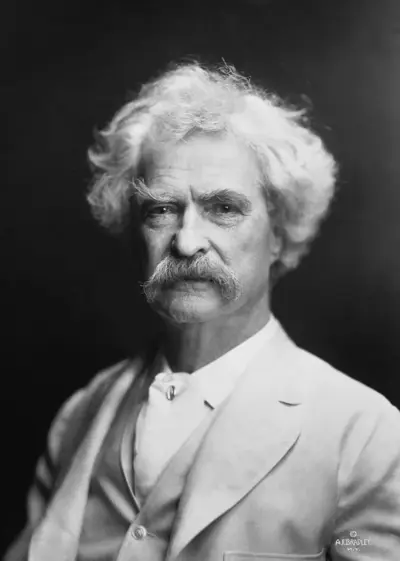
Samuel Langhorne Clemens, known by his pen name Mark Twain, was an American writer, humorist, entrepreneur, publisher, and lecturer. He was lauded as the "greatest humorist the United States has produced," and William Faulkner called him "the father of American literature". His novels include The Adventures of Tom Sawyer (1876) and its sequel, the Adventures of Huckleberry Finn (1884), the latter often called "The Great American Novel".
