Ernest Hemingway Quotes
Practice any faith you wish. Got a ball field up the island where you can practice. I'll give the Deity a fast one high and inside if he crowds the plate.
Hotchner, A. E. Papa Hemingway: A Personal Memoir. Random House, 1966.


Spinoza’s ideas were considered so radical and dangerous that he was the only man in history who was excommunicated by the Catholics, the Jews and the Muslims.


The wording was rejected and the delegates insisted upon the original proposed language: “Well aware that Almighty God hath created the mind free …” This is a very important historical quotation because it shows that Henry and a few others wanted to make the society Christian centric, However, the majority insisted that it be non-sectarian. Many of the delegates rejecting the “Jesus Christ” language were themselves practicing Christians, but they were aware of the terrible religious wars and strife in Europe and between Christians and Muslims as well as the persecution of Jews, Quakers, and other sects; they did not want that in America so they rejected the idea of an established Christian Church or culture.

In the American system, we do not oppose any religion. We do oppose the right of any religion to use the power of the state and governments to compel or use government resources to promote or subsidize their religion. Other countries have established churches or a national religion. In that sense, some religions perceive America objects to their religion because we do not make it our established religion. Opposing prayer in public schools is not opposing prayer. It is only opposing prayer in that specific context where all payers are paying including the non believers in that particular religion.


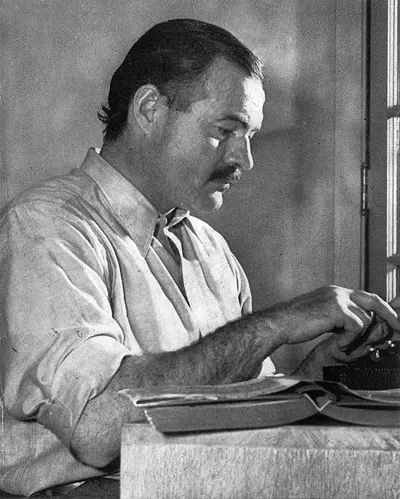
Ernest Miller Hemingway was an American novelist, short-story writer, journalist, and sportsman. His economical and understated style—which he termed the iceberg theory—had a strong influence on 20th-century fiction, while his adventurous lifestyle and his public image brought him admiration from later generations. Hemingway produced most of his work between the mid-1920s and the mid-1950s, and he was awarded the Nobel Prize in Literature in 1954. He published seven novels, six short-story collections, and two nonfiction works. Three of his novels, four short-story collections, and three nonfiction works were published posthumously. Many of his works are considered classics of American literature.
