Simon Bolivar Quotes
Popular elections by country rustics and intriguing city-dwellers are one more obstacle to the practice of federation among us; because the former are so ignorant that they cast their votes mechanically, and the latter so ambitious that they convert everything into factions; therefore in Venezuela there has never been a free and just vote
Simon Bolivar 1783-1830, South American Colonial Liberator, President of Venezuela and Columbia, Cartegena Manifesto 1810, Quoted in Robert Harvey, Liberators
Sourced by: Eigen's Political and Historical Quotations


This quotation of a very popular Muslim cleric illustrates the wide range of political views of Islamic leaders and authorities. Whereas most shun democracy as placing public opinion over the word of God, there are many like al-Qaradawi who have a modernist interpretation of Islam.


The University Presidents had written to the American Public arguing that the German aggression was the result of the militarists in the German society dominating the people and pushing them to war. They argued that most German people were not really responsible. Lamprecht took exception and argued that the German policy was the democratic will of the majority of the German people. He claimed that Germany at the time was more of a de facto democracy than America—as the Untied States did not have a Voting Rights Act or any way of de facto ensuring that all citizens could vote—particularly Negroes in the South. While he was accurate about the voting aspects of a democracy, Germany neither had the Constitution nor a judiciary that was independent and co-equal to the executive and legislature, but Germany did not have the institutions with democratic traditions. The greatest embarrassment to modern Germans is that Adolf Hitler was actually elected by a majority of Germans and was very popular until things in Germany started to go poorly. This quotation is very important in that it shows the importance of a Constitution to limit the powers of even a popularly elected government.


All sides had agreed to free and fair elections. However, the South Vietnam government was so corrupt and uncaring for its people, that they had little political support. Chern's assessment that the Communists would win in a free and fair election was a reality that forced the United States to support the South Vietnamese refusal to hold the required elections.


Actually the program had been taped earlier and on the day of broadcast, Biti had been arrested in Zimbabwe for ‘treason’ by the vicious dictator, Robert Mugabe, who had been beaten by the opposition in the election for the presidency but refused to relinquish power and in a stunning example of Biti’s point, the Electoral Commission never “officially” released the results showing that Mugabe had been defeated despite his control of all of the media, goon squads, and prohibition, intimidation and murder against opposition. See {619882}.


This illustrated the problem with Nazi Germany where Hitler was elected by the people. In a Constitutional democracy such as the United States, when an elected President attempts to cut away constitutionally insured freedoms, there is public opinion, the press, a Congress and a Supreme Court to check him as occurred in the George W. Bush Administration over wiretapping, torture, and handing of war captives. These were checked, but they were minor and trivial compared to Nazi Germany’s abuse of freedom. In Germany, Hitler weakened or destroyed all those who might check his power and therein lies the essential difference. The despot must eliminate or weaken the checks on him. In the American democracy, the Congress finally checked John Adams’ Alien & Sedition Act as did public opinion by turning him out of office after one term. But in each case, in democracy or dictatorship, the same argument is often made if the elected leader impinges on some freedoms: it is legitimate because he represents the will of the people. Spencer and many others have always disagreed.

Even in modern America, we overreact to foreign attacks or acts of terrorism as do most democracies and intestine party conflict is common.
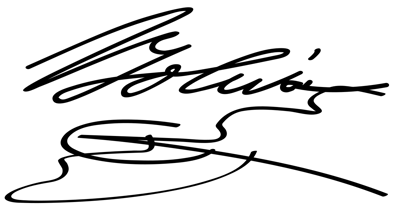
Simón José Antonio de la Santísima Trinidad Bolívar y Ponte Palacios y Blanco (Spanish: [siˈmom boˈliβaɾ] (listen), English: /ˈbɒlɪvər, -vɑːr/ BOL-iv-ər, -ar also US: /ˈboʊlɪvɑːr/ BOH-liv-ar), also colloquially as El Libertador, was a Venezuelan military and political leader who led what are currently the countries of Venezuela, Bolivia, Colombia, Ecuador, Peru, and Panama to independence from the Spanish Empire.
