Henry Miller Quotes
Perhaps I am still very much of an American. That is to say, naïve, optimistic, gullible. In the eyes of a European, what am I but an American to the core, an American who exposes his Americanism like a sore. Like it or not, I am a product of this land of plenty, a believer in superabundance, a believer in miracles.
Miller, Henry. The Air-Conditioned Nightmare. New Directions, 1945.


The French were culturally not very warlike or militaristic and in the past two centuries had not been very aggressive like the British or the Germans. The Kaiser showed is ethnic ignorance in that the Anglo-Saxons were the merging of two people the English Saxons and the French who under William the Conqueror had defeated the Saxons. However, that was a common perception in racist Germany at the time. Most important however was that the Kaiser and the German military believed it and the fact that France may enter WWI against them was not taken as a serious threat so the German aggression proceeded. The French military gave Germany much more difficulty in the battlefield than they anticipated.

Under President William Clinton the United States had been very popular abroad with Clinton greeted enthusiastically in most part of the world. When President George W. Bush took office the image of America took a downward plunge to one of the lowest points in American History. Many like Hyde could not understand why the United States could not present its image better. Others claimed that Bush and his policies and practices were so unpopular that media techniques and public diplomacy could not change reality.


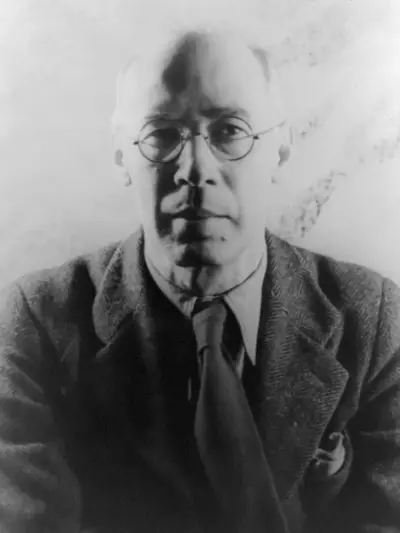
Henry Valentine Miller was an American writer and artist. He was known for breaking with existing literary forms and developing a new type of semi-autobiographical novel that blended character study, social criticism, philosophical reflection, stream of consciousness, explicit language, sex, surrealist free association, and mysticism. His most characteristic works of this kind are Tropic of Cancer, Black Spring, Tropic of Capricorn and The Rosy Crucifixion trilogy, which are based on his experiences in New York and Paris (all of which were banned in the United States until 1961). He also wrote travel memoirs and literary criticism, and painted watercolors.
