Roscoe Conkling Quotes
Parties are not built by deportment.
Roscoe Conkling, 1829-1888, U. S. Congressman & U.S. Senator (Republican, NY), Quoted in Hofstadter, The American Political Tradition, Vintage 1948
Sourced by: Eigen's Political and Historical Quotations


There was a social custom amongst the wealthy women of early American society where if they were moving to a new town, they would present their cards to the established female residents, who would then visit the newcomer at her home. Dolley Madison, anxious to bring some social civilization to Washington, still a rough swamp area, went out of her way to visit all comers and the Cabinet (Department) wives then did the same. However, as the government and Washington grew, this became more and more difficult, and subsequent first ladies wanted more of their privacy and time devoted to family. As America grew in importance, more counties sent ambassadors to Washington, and their wives all expected to be visited and invited. See {620648} for more on the “obligations” of a first lady and cabinet wives.


His interviewer had asked him what he, as a cultural critic and a political essayist, thought of Donald Trump’s campaigning style.


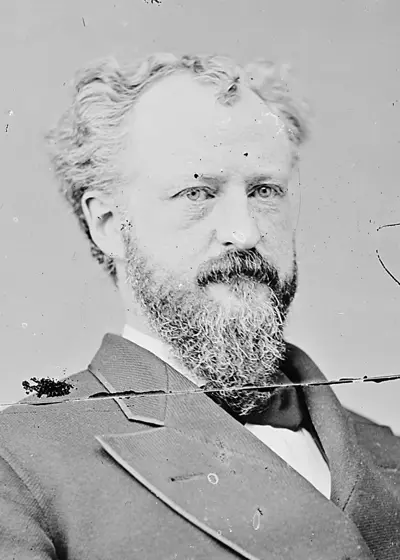
Roscoe Conkling was a lawyer and politician from New York who served both as a member of the United States House of Representatives and the United States Senate. He was the leader of the Stalwart faction of the Republican Party, the first Republican senator from New York to be elected for three terms, and the last person to turn down a U.S. Supreme Court appointment after he had already been confirmed to the post. While in the House, Conkling served as bodyguard for Representative Thaddeus Stevens, a sharp-tongued anti-slavery representative, and fully supported the Republican war effort. Conkling, who was temperate and detested tobacco, was known for his physical condition, maintained through regular exercise and boxing, an unusual devotion for his time. Conkling was elected to the Senate in 1867 as a leading Radical, who supported the rights of African Americans during Reconstruction.
