Kenzaburo Oe Quotes
Paradoxically, the people and state of Japan living on such moral props were not innocent but had been stained by their own past history of invading other Asian countries.
Oe, Kenzaburo. "Japan, the Ambiguous, and Myself." Japan, the Ambiguous, and Myself: The Nobel Prize Speech and Other Lectures, Kodansha International, 1995.


The Serbs were in a conflict with the Ottoman Muslims almost 1000 years ago. However, they have never seen that war as having ended. When the Albanian Muslims were breaking from the weakened Ottoman Empire, the Serbs not only wanted to dominate Albania, but also to extract vengeance for alleged wrongs committed by Ottoman Muslims hundreds of years earlier. This attitude existed through and after the Serbian war and the Kosovo Albanian population would not live under Serbian control given the Serb war crimes and atrocities perpetrated on Muslims—not only in the historical past but even in the Serbian War. Tucovic was one of the very few Serbs who not only argued that the Serbian policy of oppression of the Muslims was not only morally wrong but counter productive from the Serbian point of view. For many Serbs, Tucovic was considered a traitor.


Chavez frequently insulted officials and leaders of other countries. See linked quotes for examples.


This is only one of many anti-American and anti-Israeli and anti-Semitic passages in the text. It is typical of much of the Wahhabi literature which also supports jihad and violence. Much of the funding for the Wahabbi comes from the Saudi Arabian Government and members of the Saudi Royal Family. There is total censorship in Saudi Arabia and nothing gets preached or printed if the Saudi government wishes otherwise. However, most of the imams in Saudi Arabia are Wahhabi and are paid by the government. The Royal Family’s only fear of losing power is if the Islamic clerics claim that the government is not supportive of Islam. They spend much money to buy their lack of opposition to the monarchy. The government position however is contrary to these hate-filled textbooks.

In 1936, Fascist Italy invaded Ethiopia in an effort to obtain an African colony like other European Countries had. Over 50 nations had promised aid to Ethiopia if attacked but then the Italian attacks came, it was not just soldiers with some small artillery and vehicles. Instead it was a full modern army with not only heavy artillery and tanks, but extensive use of air power against villages and towns which generally hardly had rifles. The airplane carnage of civilian populations was a shock to the world. However, the tactics were studied by the Italian German Fascist allies who further developed air power use against unarmed towns and cities in the Spanish Civil war. The aid promised to Christian Ethiopia never materialized because there was a worldwide depression and the great powers would have had to commit to major war—not just send some arms and ammunition. The Ethiopians mostly fought with spears and knives. The Fascists were thus emboldened for the invasion of Europe a few years later.

The Japanese Government was in the control of ardent militarists intent on expanding the Japanese empire. They invaded Manchuria and had designs on China. The League of Nations was very weak, in large part because the United States had not joined when the Senate refused to ratify the treaty. So peace or war In Asia depended on the fascist, military clique that ruled Japan.


In early WWII, he opposed the Japanese military practice of killing conquered civilian people to instill fear and make them accept occupation. (In this case in occupied Indonesia). He was arrested by the military and sentenced to death, but he never was executed. Though not generally known, there were a number of Japanese who opposed the Japanese military policies and practices. He was one.


1st Viscount Grey of Fallodon. He was advocating British entry into WWI in defense of the Neutrality of Belgium as was their treaty obligation.

There were actually very few incidents of civilian resistance to the German invaders and occupiers. However, they were exaggerated and used as a pretext for what amounted to atrocities and war crimes against the Belgian Civilians.


Khanenei failed to make three important distinctions. First, the crimes committed by American forces in Abu Ghraib and Guantanamo were NOT the policy of the American government whereas all of Hitler’s crimes were not only government policy but Hitler had laws passed to enable these atrocities. Bush and the American Military command may have not been competent enough to prevent the problems, and may have been too lenient to punish the guilty, but they never intended them to occur. Second is scale. Abu Ghraib and Guantanamo illegalities led at most to the deaths of one or two people. Hitler killed over 6 million in his prisons. Third, as soon as Bush found out about the problems, they were stopped whereas Hitler continued until militarily removed from power and neutralized.
“Lebensraum” was a German expansionist concept of the time which has no good English translation. Literally, it means “living room”. The Germans had this notion that the German race and nation had to have more land to accommodate the growth of the German people. And because the Germans were a superior race, they were entitled to the land surrounding Germany in which to have Germans grow and thrive. The “inferior” peoples who lived on the land could be exterminated so that Germany would have this expansion room. The “Death’s Head units” were special German elite troops who used the Death’s Head as a symbol on their uniforms. Some of the Generals were concerned that the rest of the world would condemn Germany and possibly interfere if they exterminated the Poles. Hitler pointed to the example of the Turks who had killed most of the Armenians in the Armenian Genocide in the early 20th century. They got away with it with no outside interference, and there were no international consequences for Turkey. Hitler, convinced that the Armenian genocide was the precedent, thought Germany could easily get away with murdering the Gypsies, seriously handicapped, homosexuals, Russians, Poles and Jews. For other quotations on the Armenian Genocide, see {51838}, {638251}, {620602}, {620603}, {620604}, {620605}, {620600}, and {620606}
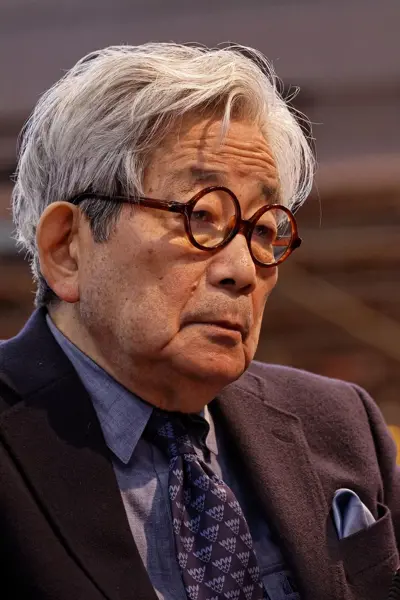
Kenzaburō Ōe is a Japanese writer and a major figure in contemporary Japanese literature. His novels, short stories and essays, strongly influenced by French and American literature and literary theory, deal with political, social and philosophical issues, including nuclear weapons, nuclear power, social non-conformism, and existentialism. Ōe was awarded the Nobel Prize in Literature in 1994 for creating "an imagined world, where life and myth condense to form a disconcerting picture of the human predicament today".
