Julian Lincoln Simon Quotes
Our supplies of natural resources are not finite in any economic sense. Nor does past experience give reason to expect natural resources to become more scarce. Rather, if history is any guide, natural resources will progressively become less costly, hence less scarce, and will constitute a smaller proportion of our expenses in future years.
Simon, Julian L. The Ultimate Resource 2. Princeton University Press, 1996, p. 5.


Sealed under duress and later repudiated by the King with Papal assistance. This clause was particularly interesting in that almost all freedoms have expanded from the Magna Carta in modern democracies. However in this one there was an absolute direct prohibition against the King—the State—taking private property without the owners consent. In modern democracies the right is not as strong as the original. The state, if it needs the property, wood or whatever, and the owner refuses to give it or sell it to the state, the government can condemn the property but must pay the owner the fair market value of the property seized. As a practical matter, the kings of England paid little or no heed to this clause. One of the sources of conflict between the English Royal Navy and the American Colonists was the practice of Naval agents finding tall straight trees, good for the main mast of a ship, and marking it thereby prohibiting the property owner of cutting down that tree until the Crown sent a crew to fell the tree and take it for ship building. They paid no attention to Aticle 31 whatsoever.


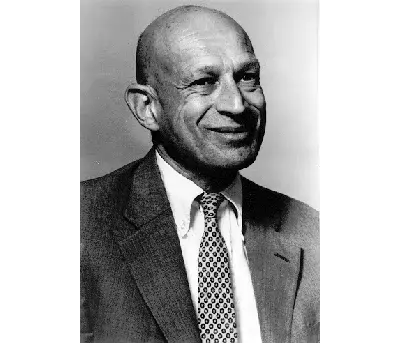
Julian Lincoln Simon was an American professor of business administration at the University of Maryland and a Senior Fellow at the Cato Institute at the time of his death, after previously serving as a longtime economics and business professor at the University of Illinois at Urbana-Champaign.
