John Sherman Cooper Quotes
Our staff not only received the reports from these agencies, they examined them. They questioned them.
United States, Congress, House, Select Committee on Assassinations. Investigation of the Assassination of President John F. Kennedy: Hearings Before the Select Committee on Assassinations of the U.S. House of Representatives, Ninety-Fifth Congress, Second Session. Vol. 3, U.S. Government Printing Office, 1979.


The issue under discussion was the fact that the United States Military does not, unlike all civilian courts, maintain a docket of court martials. An interested citizen or a reporter, who usually has a right to attend and observe the proceeding has no way of finding out where and when the proceeding will take place unless the military chooses to inform people or make it public. Courts Martial are legally open to observers except for special circumstances—like civilian criminal trials. However, the military wants as little coverage as possible.


The original charge of biological weapons was made by the Afghan Mudhjadeen, who had retrieved a substance from an area the Russians had shelled. Some Americans echoed the charges and upon inspection, the substance turned out to be bees wax and droppings. Some CIA officials thought that true of not, the charge amounted to good propaganda eliciting the ambassador’s response.

Other leaders of the time also didn’t comprehend what was happening. See Dole {599943}. Later, Clinton apologized to the Rwandans. See {598255}.


{625555} is a Russian Proverb conveying the same idea.


This view is one of the reasons that scientists have often been at odds with governments and religions.

This principle, so important to the philosophy of science, was a major component of the philosophy of Spinoza—the part that had him excommunicated by the 3 major religions of the era.


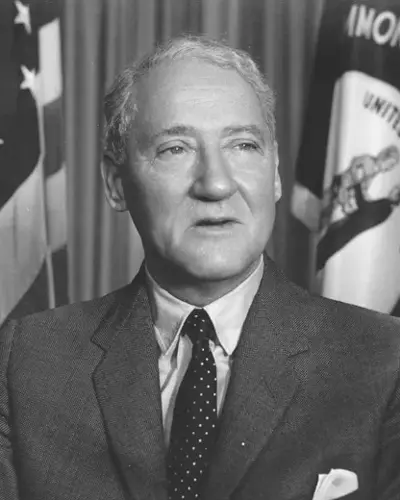
John Sherman Cooper was an American politician, jurist, and diplomat from the Commonwealth of Kentucky. He served three non-consecutive, partial terms in the United States Senate before being elected to two full terms in 1960 and 1966. He also served as U.S. Ambassador to India from 1955 to 1956 and U.S. Ambassador to East Germany from 1974 to 1976. He was the first Republican to be popularly elected to more than one term as a senator from Kentucky and, in both 1960 and 1966, he set records for the largest victory margin for a Kentucky senatorial candidate from either party.
