Louis V. Gerstner Jr. Quotes
Our military should be trained and structured around missions, not the elements of air, water, and land.
Gerstner, Louis V. "Trump's Chance to Fix the Government." The Wall Street Journal, 27 Dec. 2016.

Clark had commanded the American and NATO forces in the Serbian War where all the military and political objectives were accomplished with heavy losses to the Serbian’s and none to the allied side—what many think was the most successful war in American History. Like Eisenhower in WWII one great challenge was the political and strategic one of keeping the coalition of all the allied governments working together. His perspective had been like Eisenhower and other officers in history was much wider and geopolitical than most military officers.


See {637854} for a quote on the soundness of our military planning.


He later provided a copy to Hezekiah Niles, February 5, 1819 which is the source of the quotation since Henry never mentioned it.

The Emperor was writing to his son to explain the defeat of Japan. In what was a bit of revisionist history, the Emperor neglected to mention that with the exception of some of the incursions in China, Hirohito had personally approved every Japanese invasion including Pearl Harbor. Further, it was he who had approved the orders that Japanese troops should fight to the death rather than retreat or surrender.

He had wanted more troops for the Afghan War than President Obama would approve. The Republican members of the Congress tried to make the difference a major issue of a President not supporting his commanders. The General made this brilliant response.

Connecticut’s militia had the large contingent of British Troops outside of Boston to their North and the extensive British military to their South in New York City. So there was no where they could maneuver without running into overwhelmingly superior British Forces.


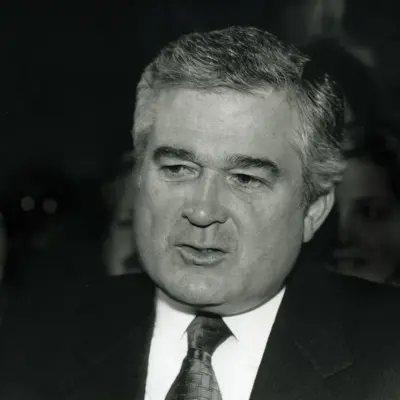
Louis Vincent Gerstner Jr. is an American businessman, best known for his tenure as chairman of the board and chief executive officer of IBM from April 1993 until 2002, when he retired as CEO in March and chairman in December. He is largely credited with turning IBM's fortunes around.
