Hannah More Quotes
Our merciful Father has no pleasure in the sufferings of His children; He chastens them in love; He never inflicts a stroke He could safely spare; He inflicts it to purify as well as to punish, to caution as well as to cure, to improve as well as to chastise.
More, Hannah. Practical Piety; or, The Influence of the Religion of the Heart on the Conduct of the Life. Vol. 2, T. Cadell and W. Davies, 1811.


This quotation which is so shocking to most people is classic amongst many religious fundamentalists. They regard infidels and blasphemers as so evil, that in their view it is doing the evil person a favor to kill him. While in the 21st century, most people believe that his view is that of fundamentalist Muslims, it is also the view of some fundamentalist Christians who cite the Biblical call for the death penalty for blasphemers. The difference is that there are very few Christians who believe that today, while there are many Muslims who do. However, in the past, this was a common view amongst Christians. The Inquisition of the Roman Catholic Church held this view and it even prevailed into the early 20th century where Spain continued to execute heretics.


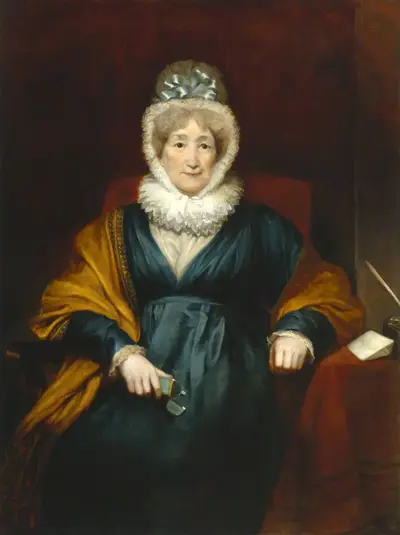
Hannah More was an English religious writer and philanthropist, remembered as a poet and playwright in the circle of Johnson, Reynolds and Garrick, as a writer on moral and religious subjects, and as a practical philanthropist. Born in Bristol, she taught at a school founded there by her father and began writing plays. She became involved with the London literary elite and was a leading Bluestocking member. Her later plays and poetry became more evangelical, and she joined a group campaigning against the slave trade. In the 1790s she wrote several Cheap Repository Tracts on moral, religious, and political topics for distribution to the literate poor (famously a riposte to Thomas Paine's Rights of Man). Meanwhile, she broadened her links with schools that she and her sister Martha had founded in rural Somerset. These modelled her strictures on the education of the poor, permitting a limited reading ability but no writing.
