Alexander Meiklejohn Quotes
Our greatest present disloyalty to the Constitution lies in the fact that we do not study and criticize it as did the men who devised and adopted it.
Alexander Meiklejohn, 1872-1964, Philosopher & President of Amherst College, Political Freedom, 1948
Sourced by: Eigen's Political and Historical Quotations


The president was asked if he supported the Supreme court's school desegregation decision:


This quotation is particularly important because it summarizes one of two opposite schools or thought regarding judicial interpretation of the Constitution that politicians have been arguing about since the Supreme Court first sat. The other is Original Intent where only the original intentions of the writers and ratifiers of the Constitution should be considered—assuming that it can be determined.


The Presidential election of 1800 produced a crisis even greater than that of 2000. There was an Electoral College tie between Thomas Jefferson and Aaron Burr—both of the same party, Democratic Republicans. The Federalist Party led by President John Adams had been totally rejected by the voters and Adams was in third place. However, the Federalists saw an opportunity of maintaining the Presidency anyway. The Constitution threw the election into the House of Representatives with each State delegation having a single vote. In the House, the Federalists had parity with Jefferson’s party which resulted in 35 tie votes. Finally, Congressman Bayard, the sole Congressman from Delaware, withheld his vote on the 36th ballot, thereby electing Thomas Jefferson of the opposition party. His reason was:


Cummings was arguing against a Constitutional amendment. His alternative led to Roosevelt's court packing schema.

Jackson was reacting to the claimed right of South Carolina to nullify Federal tariffs and other Federal laws.


Powell was the Secretary of State and Addington kept advising the administration that as long as the President was acting in defense of the country in his capacity as Commander in Chief, he did not have to obey any existing laws that had been Constitutionally passed which in the opinion of the President restricted or limited the President or the executive branch. Addington was an attorney and Assistant to the Vice President, but he was given much responsibility for administration policy. Powell the Secretary of State of the Administration could not have disagreed more and although most politicians including Republicans disagreed with the Addington thesis, Powell was one of the few Republicans to criticize the Addington position.
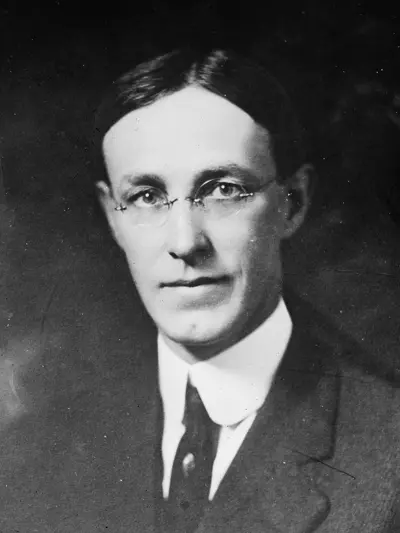
Alexander Meiklejohn was a philosopher, university administrator, educational reformer, and free-speech advocate, best known as president of Amherst College.
