Stanley A. McChrystal Quotes
Our bureaucracy had excelled at compartmentalizing intelligence - we had a 'need to know' system - but by 2004, it was impossible to foresee what elements of our organization would and would not need to know a given piece of information.
McChrystal, Stanley A. Team of Teams: New Rules of Engagement for a Complex World. Portfolio/Penguin, 2015.

This radical reform did not make much headway. The “need to know" standard used specific knowledge to signify the status of different officials and was intended to minimize the likelihood of intelligence leaking as few people saw the whole picture and understood the implications. But that was the great weakness in that the major purpose of intelligence is to analyze the information and guide the nation’s policies and responses to events and situations. Without all the information available so many intelligence and other officials are unable to ‘connect the dots’ and see the picture emerging. The attack of September 11 was a classic example where much of the information that was known never was conveyed to most people and so no one had a big enough picture. By the time one could establish a ‘need to know’ it was too late to utilize the conclusions even if they were reached in time.


This is one of the reasons that Europe had many security problems during that period. Some of the countries had very poor intelligence services. Even the ones that did have quality intelligence, tended to avoid sharing intelligence with their neighbors.


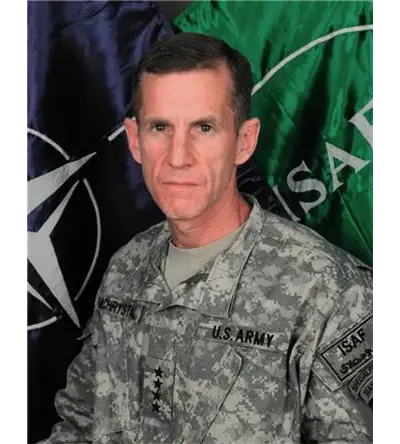
Stanley Allen McChrystal is a retired United States Army general best known for his command of Joint Special Operations Command (JSOC) in the mid-2000s. His last assignment was as Commander, International Security Assistance Force (ISAF) and Commander, United States Forces – Afghanistan (USFOR-A). He previously served as Director, Joint Staff from August 2008 to June 2009 and as Commander of JSOC from 2003 to 2008, where he was credited with the death of Abu Musab al-Zarqawi, leader of Al-Qaeda in Iraq, but also criticized for his alleged role in the cover-up of the Pat Tillman friendly fire incident. McChrystal was reportedly known for saying what other military leaders were thinking but were afraid to say; this was one of the reasons cited for his appointment to lead all forces in Afghanistan. He held the post from June 15, 2009 to June 23, 2010.
