Lord Byron Quotes
Opinions are made to be changed - or how is truth to be got at?
Blessington, Marguerite. A Journal of the Conversations of Lord Byron with the Countess of Blessington. Henry Colburn, 1834, p. 320.


Although this quotation has been cited by many scholars, none has yet given a primary citation. As a result a few researchers question the attribution to Keynes and argue that the first primary source of this notion was the Nobel Laureate in Economics Paul Samuelson -- Quote {645739}. However, even Samuelson attributed this quotation to Keynes although he did not do so at this particualr interview.
See {627632} for an earlier advocy of change when circumstances warrant and {636175} for a modern view.

Most politicians would never do this. Ideologues rarely analyze their beliefs. Pragmatic politicians are fearful of being called a flip flopper with no core principles. However, some politicians follow this advice. For example, Abraham Lincoln and Franklin Delano Roosevelt were both among the rare politicians who would frequently change positions as they learned more. See John Maynard Keynes {619441} for a personal statement of this principle and {636175} for a modern view.

Islamic modernists like Serageldin are many among the educated Muslims but their views are often drowned out by the violence and extremist statements of the fundamentalists.


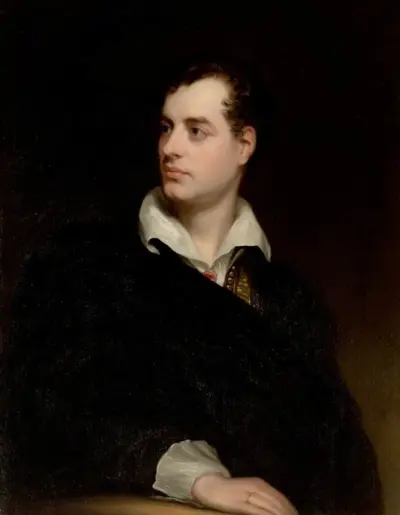
George Gordon Byron, 6th Baron Byron, FRS known simply as Lord Byron, was an English peer, who was a poet and politician. He was one of the leading figures of the Romantic movement and is regarded as one of the greatest English poets. He remains widely read and influential. Among his best-known works are the lengthy narrative poems Don Juan and Childe Harold's Pilgrimage; many of his shorter lyrics in Hebrew Melodies also became popular.
