Karl Kautsky Quotes
Only when the modern bureaucracy was highly developed could the complete abolition of the parish priests as a political institution be contemplated.
Karl Kautsky, 1854-1938, Czech/German Journalist, Publisher & Editor, Founder of Die Neue Zeit, Thomas More and his Utopia, 1888
Sourced by: Eigen's Political and Historical Quotations

Spinoza’s ideas were considered so radical and dangerous that he was the only man in history who was excommunicated by the Catholics, the Jews and the Muslims. This quotation, in the 17th century outraged almost every cleric. This is one of the strongest and unequivocal statements about the desirability of separation of church and state. Interestingly, as early as this statement was, Spinoza believed that harm extended to both religion and government.


Joseph ben Matthias. The term was coined by Josephus to refer to the fundamentalist, orthodox Jewish view of a proper state, as opposed to a secular government. The Jewish fundamentalist dream of a theocracy came down through modern times. There were ultra-orthodox Jewish groups who opposed the creation of the State of Israel on the grounds that it is not a theocracy and there are some who still want to see Israel transformed. The term became generalized and is applied to any state where the religion is the state and religious leaders dominate and control the state. The ultra orthodox Muslims, as in Iran, are generally the only religious group who have created theocracies or semi-theocracies as Islamic states. See {638106} for the context in which the term was first used.

Basil the Great

The clergy of the colonies were split on the American Revolution, but those clergy who supported the revolution made a huge contribution to the individual American’s intellectual view of the legitimacy of Parliament’s making laws governing the American Colonies. The anti-British clerics called for action while other forces of colonial America urged caution.

This quotation illustrated the extreme polarization between the current fundamentalist Muslims, and the Muslim modernists and the West. Kamal Ataturk, the great leader and stateman who is the father of modern Turkey, is castigated by the author for leading the new Turkish parliament to depose the Caliph – the civil and religious autocrat, one of whom reigned from after the death of Muhammad till his abolishment in 1924. Most of the rest of the world credits Ataturk with being one of the great leaders of all time—one who led a democratic revolution which transformed Turkey into the only Muslim secular democracy, requiring pubic secular European type education for all children, giving women the right to vote (before the U. S. even), adopting a European alphabet and dress, and outlook on life—creating most remarkably a total cultural revolution with virtually no loss of life. No revolutionary leader, before or since has led so extensive a political and cultural revolution, and it was a bloodless revolution. Turkey, into the 21st century, was by far the most powerful, industrialized, scientific and modern nation of Muslims in the world and others were far behind. Yet many Islamic theologian still castigate Atatork for his great achievements as being against the will of God.


Bureaucracy has always been a problem for communist and capitalist alike.

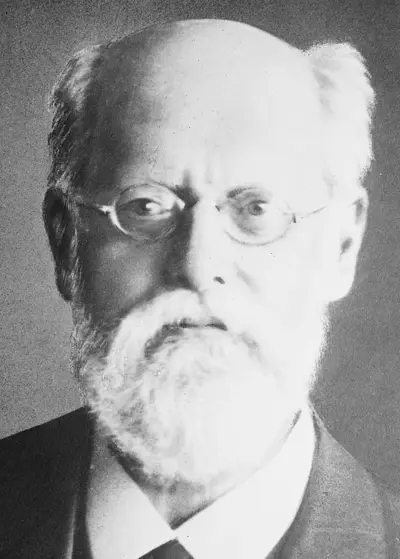
Karl Johann Kautsky was a Czech-Austrian philosopher, journalist, and Marxist theoretician. Kautsky was one of the most authoritative promulgators of orthodox Marxism after the death of Friedrich Engels in 1895 until the outbreak of World War I in 1914. He was the most important socialist theorist during the years of the Second International. He founded the socialist journal Neue Zeit.
