Robert K. Merton Quotes
Only when he has published his ideas and findings has the scientist made his contribution, and only when he has thus made it part of the public domain of scholarship can he truly lay claim to it as his own. For his claim resides only in the recognition accorded by peers in the social system of science through reference to his work.
Merton, Robert K. "Priorities in Scientific Discovery: A Chapter in the Sociology of Science." American Sociological Review, vol. 22, no. 6, 1957, p. 640.

Even before being an independent country, America had two contrasting and contradictory views of patents—the one that Franklin herein states and the one what was written into the constitution that argued that by granting patents inventors would be incentivized to make their trade secrets public if they had an exclusive monopoly on if for a period of time. Both of these philosophies towards patents have coexisted since then. There was a Federal patent system for those who wanted to use it, and for those who did not, they could enter the invention to the public domain as Franklin urged. Arguably, we have obtained the best of both approaches. Millions of patents have been filed and granted and yet some of the most important inventions have followed the Franklin approach. See the quotes about the Salk Polio Vaccine—{29154} and {29187} and the quote on "open source" computer software—{29676}. With billions of dollars being made by protected software in the early 21st century, over half of the world's computers were operating on systems that was public domain and without charge as just one large example of the Franklin philosophy still coexisting.


There was the beginning of a major debate in the advanced countries over the notion of copyright to protect authors and knowledge being a public property. The solution for America and most nations was to allow copyright protection for the specific expression of the knowledge but not the knowledge itself. You cannot copyright an idea or the laws of science—just the way they are expressed. Therefore all are free to discuss the knowledge and also write about it.

Although most people do not realize it, ideas cannot be copyrighted under present and traditional copyright law. The manifestation of the idea, the specific design, words, fonts, and layout can be copyrighted, but someone else can legally use and publish that idea with a different design and words.

This doctrine of law was settled, but in the technological and digital age some people have tried to extend the intellectual property doctrine to include some ideas if they idea is a procedure or a set of DNA instructions. Meanwhile, the legal doctrine has been and is, as stated by Brandeis in this quotation, is that new and original ideas are not intellectual property and are always in the public domain, no matter how original.


When Secretary of State, Jefferson ran the first American Patent Office. The Patent system was originally and educational program, not an intellectual property program. Inventors would keep all their technological secrets to themselves. The idea behind the original patent system was to give an inventor a limited monopoly on profiting from his invention in exchange for sharing his information and techniques with his countrymen—thus improving the technological competency of the entire society. The very first patents were available for public inspection for that reason. And even today, copies of patents are available easily for almost no cost. And few American ideas worked as well as our early patent system. Through its educational role and technology transfer, America came from technological nowhere to being the pre-eminent inventing nation of the world. The balance between public access to invention and innovation and preservation of some rights to the creator of intellectual property is key to modern development.


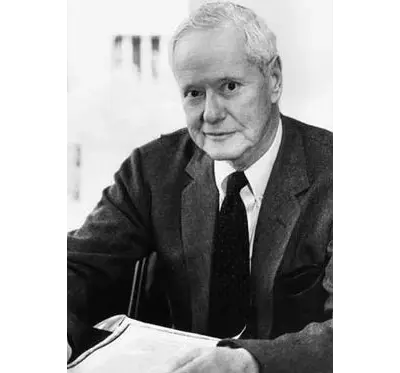
Robert King Merton was an American sociologist who is considered a founding father of modern sociology, and a major contributor to the subfield of criminology. He spent most of his career teaching at Columbia University, where he attained the rank of University Professor. In 1994 he was awarded the National Medal of Science for his contributions to the field and for having founded the sociology of science.
