Friedrich List Quotes
Only now did I recognize the reciprocal relationship which exits between manufacturing power and the national system of transportation, and that the one can never develop to its fullest without the other.
List, Friedrich. The National System of Political Economy. Translated by Sampson S. Lloyd, Longmans, Green, and Co., 1885, p. xxvi.


This section of the message was all about the Erie Canal that was under construction. Note that unlike today, where interest in public works and development is so localized, Clinton was extolling the virtue of developing the economy of the region and the nation. The money was all New York State money. The Federal Government would not fund the Erie Canal as they did not believe it was technically feasible to construct. See {624484} . Patriotism had a different meaning then.


At the time very few industrialists appreciated the value of particular workers and tended to think of them as interchangeable parts.


Although Madison vetoed the Federal bill to improve the national infrastructure, he was very much for the improvements and he said so in this veto message. He, however, did not see the Constitutional authority for the Federal government to appropriate moneys to be spent in the States for infrastructure improvement. He was for a Constitutional Amendment to do so or to make the improvements using State money as New York did building the Erie Canal. Alexander Hamilton, and many of the Congressmen who voted for the bill disagreed (many of whom were also in the Constitutional Convention) and did not see the Constitutional limitation that Madison did. See Hamilton’s Quote 644278. He was particularly concerned that small and less affluent states could not possibly have the skill to design these or the finances to build them. Later President’s and Congresses sided with Hamilton. It would be hard to envision America today of Madison’s view had prevailed.


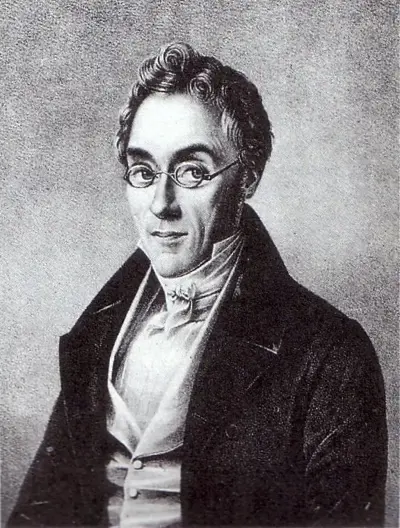
Georg Friedrich List was a German-American economist who developed the "National System" of political economy. He was a forefather of the German historical school of economics, and argued for the German Customs Union from a Nationalist standpoint. He advocated imposing tariffs on imported goods while supporting free trade of domestic goods, and stated the cost of a tariff should be seen as an investment in a nation's future productivity.
