Amina Mama Quotes
One of the key lessons of Africa, where state-directed mobilizations of women have been a regular feature of national politics, has been that women’s movements need to retain a degree of independence from the state and ruling parties.
Amina Mama, South African Political Socioogist, Women, the State and Africa, African Affairs, September 17, 2007
Sourced by: Eigen's Political and Historical Quotations


This phase of American feminism was beginning but even he had no idea of how fast it would be propelled as a result of the Second World War which would begin at the end of that year.


Jinnah was a modern Islamist who saw the role of females in a modern context. He, like the Indian Hindu leaders were in a sense products of the West and Western government and education. He would be very surprised that in his Pakistan men can murder their female relatives who they believe have dishonored the family, or that women would not be educated in the Madrassas, or that authorities could sentence a female relative of a man deemed guilty of seduction to be gang raped, but that is what happens in modern Pakistan. Jinnah and many of the early leaders believed that their new government could modernize Islam but the control and influence went the other way. Pakistan became a religiously dominated autocracy rather than the democracy that Jinnah foresaw.


Her audiences were all familiar with the Adam & Eve Biblical narration.


In this famous declaration, Stanton summarized the relative status of men and women in the society at that time. Women then could not control their own property, have their own money. “Chastisement” referred to the fact that a husband could then legally discipline his wife physically and beat her if she were not suvviciently obedient.


This is one of the biblical passages which cause some Christian Fundamentalists to prescribe a secondary and subjugated role for women. Also the view that women, like children, should be seen and not heard. Also it supports those who object to women in the ministry or the priesthood or in senior teaching positions. See {587063}. It is useful to note that much of Islam which preaches a similar view of females, probably learned it from Christianity which preceded Islam by almost 600 years.


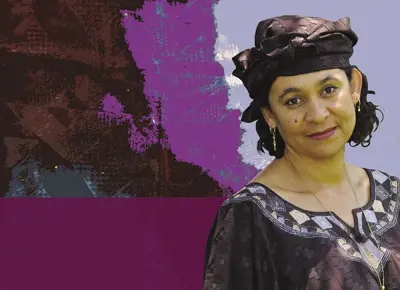
Amina Mama is a Nigerian-British writer, feminist and academic. Her main areas of focus have been post-colonial, militarist and gender issues. She has lived in Africa, Europe, and North America, and worked to build relationships between feminist intellectuals across the globe.
