Bernice Johnson Reagon Quotes
One of the biggest things I understood in a program like that was that it allowed more young African American scholars to do field research in the Caribbean and in Africa than had ever happened before in the history of the country and since.
Reagon, Bernice Johnson. "An Interview with Bernice Johnson Reagon." Interview by Cullom Davis. The Public Historian, vol. 21, no. 2, 1999, pp. 55-73.


Asante is known as “the Father of Afrocentrism.”

At the time the scientific proof of Africa as the origin of Mankind was just emerging. The President’s tentativeness is typical of his careful avoidance of hyperbole, in contrast to many other popular leaders.


For historians, this is a difficult concept to comprehend, but with the passage of time, Feynman may well be right.


Genocide generally means the intentional destruction and elimination of a people. In the case of Columbus and the Spanish Conquistadors, they thought little of the lives of the indigenous people of the New World, but they wanted them for slaves to extract the gold and silver. They wiped out several peoples, mostly as a result of the communicable diseases (mainly smallpox) they brought from Europe for which the South Americans had little or no immunity. Also the size of the invasion forces (the Spanish) was relatively small. The size in land and number of people who they invaded was huge. The Spanish were the worst of the European empires from the point of view of the native colonized people. And Columbus was the trigger. So Chavez has a point in castigating Columbus and the Spanish but, typically, and like many politicians, his oratory lacked the precision of total accuracy.

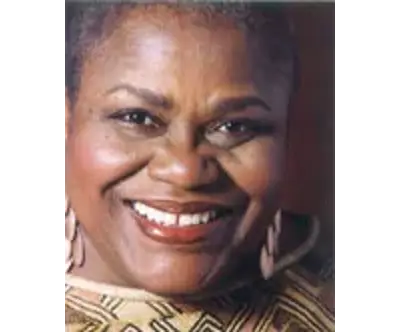
Bernice Johnson Reagon is a song leader, composer, scholar, and social activist, who in the early 1960s was a founding member of the Student Non-violent Coordinating Committee's (SNCC) Freedom Singers in the Albany Movement in Georgia. In 1973, she founded the all-black female a cappella ensemble Sweet Honey in the Rock, based in Washington, D.C. Reagon, along with other members of the SNCC Freedom Singers, realized the power of collective singing to unify the disparate groups who began to work together in the 1964 Freedom Summer protests in the South.
