Ferhat Abbas Quotes
One authority, one gun…
Ferhat Abbas, 1899-1985, President of the Algerian National Assembly, Algerian Revolutionary Leader, Slogan for his government
Sourced by: Eigen's Political and Historical Quotations


Stalin did not want any political opposition with its own militia. American gun control opponents often cite this quotation to show that in Russia, Stalin achieved dictatorial power by disarming the population in general and only allowing government officials to have guns. They argue that even Stalin could not have tyrannized the entire Soviet Union if every citizen had the right to bear arms as provided for by the Second Amendment.


Philip was the first to sign. It is not clear who actually wrote this revolutionary document which led to the Dutch revolt against Spain.


It is hard for us today to understand why intelligent, thoughtful, people would seriously consider and even advocate anarchy. Yet there were many intelligent people who preached anarchy. The key to understanding this is that it is also hard for us to realize how terrible and actually dangerous was typical life under the Russian Government of the Czars. It was not only that most people were serfs--virtually slaves, but the government officials, the military and civilian both, could and did, abuse people in every way imaginable. In America today, if any of us were unfortunate to be the victim of violence, the odds are high that it would be at the hands of another citizen. In Russia (and other countries) at the time, the odds were that the perpetrator of the violence was a government official or government sanctioned person—police, military, aristocrats, civil officers. As but one example. Cossacks would frequently get drunk, pillage and rape a community and kill any who resisted—all with impunity. This quotation from Tolstoy is the classic argument of the anarchist at the time. It was impossible that the absence of government could be as bad as the government then was.
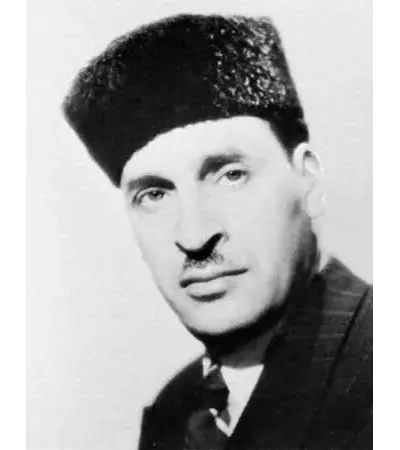
Ferhat Abbas was an Algerian politician who acted in a provisional capacity as the then yet-to-become independent country's Prime Minister from 1958 to 1961, as well as the first President of the National Assembly and the first acting Chief of State after independence. His political views evolved from pro-French collaboration to those of a revolutionary nationalist, over a period of approximately twenty years.
