Murray Rothbard Quotes
On the market, all is harmony. But as soon as intervention appears and is established, conflict is created, for each may participate in a scramble to be a net gainer rather than a net loser - to be part of the invading team instead of one of the victims.
Rothbard, Murray N. Power and Market: Government and the Economy. Institute for Humane Studies, 1970.


[Most theoretical conservative economists believe this. When presented with the reality of market systems where great damage was done to people and areas, as in the Great Depression of 1929 and the Great Recession in 2008, they tend to argue that these were not really free markets—–that for various reasons, often they argue that government interference, corrupted the free market. Almost all economists would agree that if there were real highly competitive market his quote would be corrupt, but many have shown that the very greed that is produced by a free market tends to make the major players transform the market to reduce their risk and increase their power, thus producing monopoly, oligarchy, collusion, and anti-competitive practices. Greed is never harmless if it gets enough power.]


Hoover was the Food Administrator at that time. Although he gave lip service to the free market economy concept, he was proposing government price controls and rationing. When the free market was not functioning, at this time in his career, he was willing to use government controls and regulation. By the end of 1918 over 250,000 food-handling corporations, firms, and individuals were under Food Administration licenses. Meat, fish, poultry, eggs, butter, milk, potatoes, fresh and dried vegetables, and fruits, canned goods, the coarse grains and rice, vegetable oils, coffee, and such various commodities accessory to food-handling, as ice, ammonia (for ice-making), arsenic (for insecticides), jute bags, sisal, etc., were under direct control. Ironically, later when he was President and faced with the Great Depression, he had become much more rigid and would not “interfere” with the free, private market and use government to solve the national problems. It was Franklin Delano Roosevelt who did that after Hoover would not. At the time he gave this speech, Hoover was not very political and was more of a technocrat. It may have been that by the time he became President he was intellectually and politically locked in to Republican Party conservative economic ideology.

Most companies in a capitalistic system compete mightily to obtain monopolistic positions so they can avoid capitalistic competition thereafter.


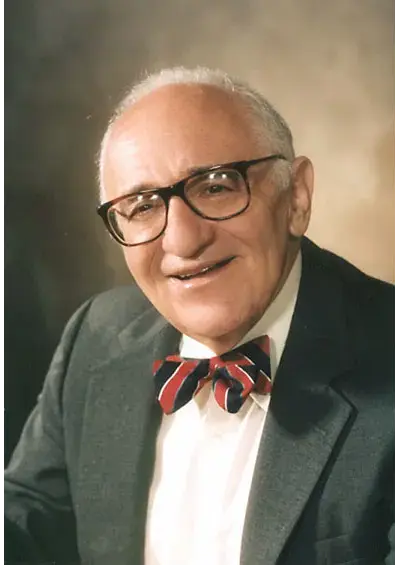
Murray Newton Rothbard was an American heterodox economist of the Austrian School, economic historian and political theorist. Rothbard was the founder and leading theoretician of anarcho-capitalism, a staunch advocate of historical revisionism and a central figure in the 20th-century American libertarian movement. He wrote over twenty books on political theory, revisionist history, economics, and other subjects.
