Richard H. Baker Quotes
On December 15, 1795, the Senate administered a stinging blow to one of the nation's most distinguished founding fathers. By a vote of 10 to 14, it rejected President George Washington's nomination of South Carolina's John Rutledge to be Chief Justice of the United States…. the Senate made it clear that an examination of a nominee's qualifications would include his political views. Those who differed substantively from the majority of senators could expect rough going.
In modern times most presidential nominations are confirmed by the Senate but the earliest precedents were contrary. In addition to this nomination being rebuffed by the Senate, Washington’s very first nomination—the tax collector of the port of New York – then the most important fiscal position in the United States – was turned down by the Senate. See 37,152.
Richard H. Baker, U. S. Historian of the Senate, Essay, A Chief Justice Rejected
Sourced by: Eigen's Political and Historical Quotations


From time to time, the assessment of a prospective Supreme Court justice has depended on an attempt to move the court in a particular direction or to prevent that. This is as opposed to the issue of the competence of the nominee. In most cases, such nominees may not have been the best qualified but they have been extremely competent. In a few cases, such as that of Justice Clarence Thomas, the justice was mediocre and inexperienced at best, but his virtues were his race and his total ideological consistency. Most attorneys can predict his vote in advance. He has never asked a question in oral arguments. See {623452} .


The majority of the country strongly favored American participation in the League of Nation provided there were some reservations that made it explicitly clear, the American troops could not be committed without the approval of Congress and that nothing would impinge on U. S. domestic sovereignty. Wilson wanted no exceptions or reservations to the treaty he had negotiated and would not compromise in any way. The issues were soon forgotten in what had become a test of will and power between the Senate and the President. The treaty was never ratified and without the United States, the League of Nations collapsed.

The Republican controlled Senate whose Judiciary Committee and voted overwhelmingly for the President’s nominee for Attorney General, Loretta Lynch, but the Senate Republicans refused to the nomination up for a vote unless the Democrats and the President would agree to add an abortion ban on money that was to be appropriated for assistance to trafficked and sexually exploited women and girls. Never before had a nomination like this have been subject to this type of blackmail over terms of legislation on a matter that had nothing to do with the nominee or the cabinet position. However, this was the time one of the extreme periods of hyper partisanship in American History.


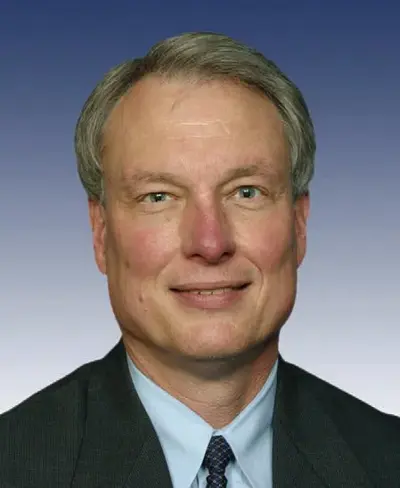
Richard Hugh Baker is an American politician and lobbyist. He served as a member of the United States House of Representatives from 1987 to 2008, representing the 6th District of Louisiana as a Republican.
