Voltaire Quotes
Of all religions, the Christian should of course inspire the most tolerance, but until now Christians have been the most intolerant of all men.
Voltaire. Dictionnaire Philosophique. Œuvres complètes de Voltaire, Vol. 20, Garnier Frères, 1879, p. 520.


Toleration is a relative term. The Muslim Moors made Christians (and Jews) pay a special tax. At times they were forced to wear special clothing so that they could be readily identified. And they could not build churches larger or taller than the smallest mosque in the community. At times, their occupations were restricted but at other times Christians and Jews were appointed to the highest positions like Vizier. The Inquisition, in contrast, forced all Muslims (and Jews) to leave the country without any of their property or money or be tortured and killed—usually by burning at the stake unless of course that they converted to Christianity.

The implication of a double moral standard for adherents of the faith and for others has been characteristics of many religions.


His intolerance and bigotry not only is of Muslims and Hindus, but extends to some Protestant denominations as well. See {643060} for additional examples of bias on the part of this erstwhile Presidential aspirant. To him, religions, unless they agree with his religious beliefs, are evil and dangerous to society.


This quotation demonstrates that religious persecution of non Muslims was a duty, This has been a characteristic of all religious persecution regardless of religion. The quotation also shows that after 600 years, the original limited tolerance the Prophet had urged for People of the Book (Jews and Christians) was waning. Instead of non-believers being tolerated if they paid the special tax and were second class citizens, leaders were urged to convert or eliminate “infidels.”

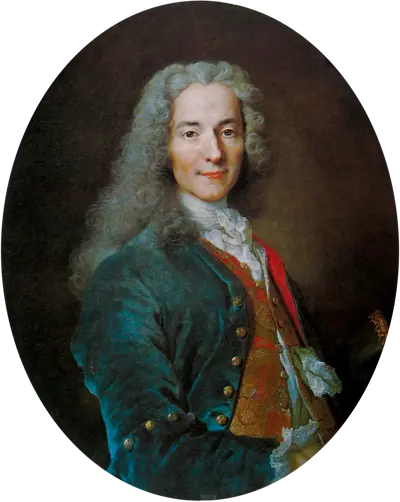
François-Marie Arouet, known by his nom de plume Voltaire (/vɒlˈtɛər, voʊl-/; also US: /vɔːl-/; French: [vɔltɛːʁ]), was a French Enlightenment writer, historian, and philosopher famous for his wit, his criticism of Christianity—especially the Roman Catholic Church—as well as his advocacy of freedom of speech, freedom of religion, and separation of church and state.
