Leonardo da Vinci Quotes
O neglectful Nature, wherefore art thou thus partial, becoming to some of thy children a tender and benignant mother, to others a most cruel and ruthless stepmother? I see thy children given into slavery to others without ever receiving any benefit, and in lieu of any reward for the services they have done for them they are repaid by the severest punishments.
Da Vinci, Leonardo. The Literary Works of Leonardo da Vinci. Translated by Jean Paul Richter, Sampson Low, Marston, Searle & Rivington, 1883, p. 289.


As a British Loyalist officer, he and his men were dispatched to Savannah, Georgia. There he saw the Southern version of slavery for the first. He questioned the character of the slave owners and most interesting, he tied the consumer enjoyment of Rice and Sugar by Northerners to the suffering of the Negro slaves. At the end of the Revolutionary war, he and many other loyalists fled to Canada and began his political career, then representing Britain in the Caribbean. Also see {591380}.


Although English, Cobett spent time in America and published a newspaper, The Porcupine Gazette, in Philadelphia. We was very conservative but on the issue of slavery his resembled a liberal point of view. He never used sugar, coffee, or rum because slave labor produced them. However, he advocated legally enslaving lazy people, blacks and whites, who would not work.


As a British Loyalist officer, he and his men were dispatched to Savannah, Georgia. There he saw the Southern version of slavery for the first time and was shocked at the cruelty. At the end of the Revolutionary war, he and many other loyalists fled to Canada and began his political career, then representing Britain in the Caribbean. See also {591379}.


Brown was the richest man in Rhode Island and made much of his money in the slave trade. This quotation shows that slavery was not completely a North verses South split. Northerners like Brown for whose family Brown University was named, was as virulent supporter of slavery as the most ardent Southerner.


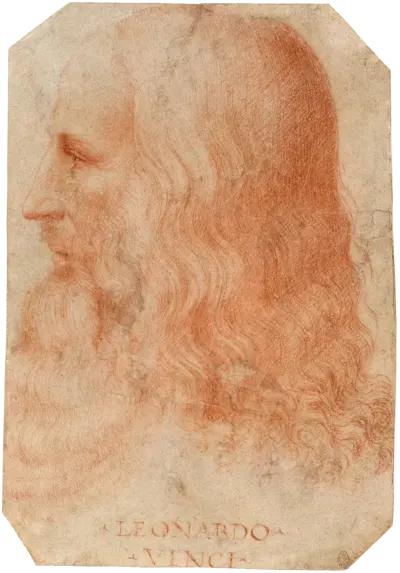
Leonardo da Vinci was an Italian polymath of the High Renaissance who was active as a painter, draughtsman, theorist, engineer, scientist, sculptor and architect. While his fame initially rested on his achievements as a painter, he also became known for his notebooks, in which he made drawings and notes on a variety of subjects, including anatomy, astronomy, botany, cartography, painting, and paleontology. Leonardo's genius epitomized the Renaissance humanist ideal, and his collective works compose a contribution to later generations of artists rivaled only by that of his younger contemporary and fellow founder of the High Renaissance, Michelangelo.
