Lord Byron Quotes
O Gold! I still prefer thee unto paper, which makes bank credit like a bark of vapour.
Byron, George Gordon. Don Juan. The Poetical Works of Lord Byron, Oxford University Press, 1904, p. 850.


At the time, a bank note—paper money issued be a private bank—was not backed by any gold or silver and was not insured bym the government. A bank could print as much as they wanted, so it was always worth less as the further you were from the particular issuing bank, the less you could get your bank note, because no one knew whether or not the issuing bank would redeem the note or even be in existence. So every private bank note had diminished value for the public. However, carrying gold and silver around and making change for precious metals was difficult and often impractical. So people used banknotes. The same thing happens with credit cards today. The merchant has to pay a fee to the credit card company and the bank and therefore charges us more for whatever we buy. But most consumers and merchants are willing to pay the difference to obtain the convenience of the credit card,

This quotation came into play in 2011 when the Tea Party tried to cause the US to default on its debts rather than raise the debt ceiling. Even their unsuccessful attempts caused much loss of confidence for America the world over, violating McKinley’s principle.

Harvey was one of those who argued that silver and not gold should be the basis of American money. The country was growing and the amount of gold was relatively fixed; therefore money was scarce and many believed the English and American financiers were hording gold deliberately. The final solution was not a gold standard or a silver standard but what we have today—a currency backed only by the full faith and credit of the U. S.


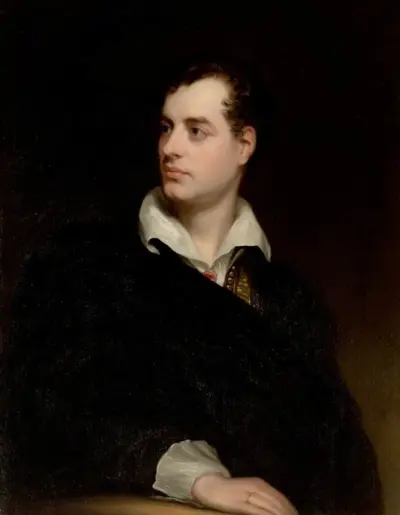
George Gordon Byron, 6th Baron Byron, FRS known simply as Lord Byron, was an English peer, who was a poet and politician. He was one of the leading figures of the Romantic movement and is regarded as one of the greatest English poets. He remains widely read and influential. Among his best-known works are the lengthy narrative poems Don Juan and Childe Harold's Pilgrimage; many of his shorter lyrics in Hebrew Melodies also became popular.
