Maimonides Quotes
Now, we occupy a lowly position, both in space and rank in comparison with the heavenly sphere, and the Almighty is Most High not in space, but with respect to absolute existence, greatness and power.
Maimonides, Moses. The Guide for the Perplexed. Translated by M. Friedländer, 2nd ed., George Routledge & Sons, 1904, p. 268.


At the time, it was very difficult for people who had been taught all their lives that God was directly responsible for the creation to accept the notion of evolution. At the time, there was not the overwhelming evidence proving Darwin’s theory that we have today. Nor did theologians realize that evolution and Darwinism were not inconsistent with the concept of a creator and supreme being. Nonetheless, there are still those who, like Agassiz, reject evolution and insist that the Biblical version of creation is literally true. See {586990}. Then there are people who have come up with the concept of Intelligent Design which originated with Agassiz though he never called it that. Most religious people today, in contrast, see no conflict in natural selection as described by Darwin and later proven, and the concept of God. They see the Biblical creation as metaphorical and natural selection as the product of an omniscient supreme being.


Amen ho tep IV. This Pharaoh adopted a monotheistic religion and imposed it upon Egypt where he could. However, as soon as he died, he was painted as a criminal for the heretical view of monotheism. It is not known whether he came upon the monotheistic concept independently or was influenced by the Jews who had first promulgated the idea. Some argue that Akhenaton was not a strict monotheist because for required the worship of the one God, Aten, but did not ban the worship of the other Egyptian gods though he personally, and his wife Nefertiti, were monotheistic.


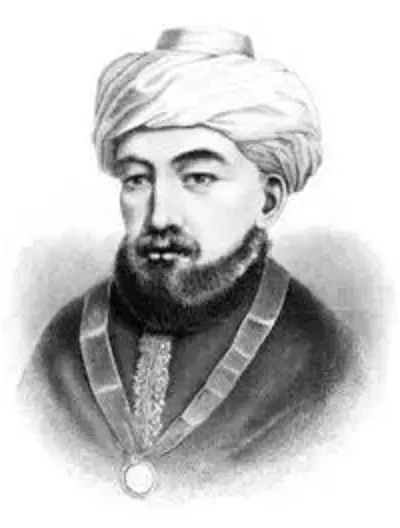
Moses ben Maimon (1138–1204), commonly known as Maimonides and also referred to by the acronym Rambam, was a medieval Sephardic Jewish philosopher who became one of the most prolific and influential Torah scholars of the Middle Ages. In his time, he was also a preeminent astronomer and physician, serving as the personal physician of Saladin. Born in Córdoba, Almoravid Empire (present-day Spain) on Passover eve, 1138 (or 1135), he worked as a rabbi, physician and philosopher in Morocco and Egypt. He died in Egypt on 12 December 1204, whence his body was taken to the lower Galilee and buried in Tiberias.
