Luke Harding Quotes
Notionally a left-wing movement, the Anti-Germans were born after the collapse of the Berlin wall. While most Germans rejoiced at the end of the Cold War, the Anti-Germans feared that a united Germany might lead to a fourth Reich - and a return of anti-Semitism.
Harding, Luke. "Notionally a left-wing movement, the Anti-Germans..." The Guardian, Guardian News & Media, 1999.


At the time Ford was considering running for President and some of the American right wing extremists were encouraging him to do so. Hitler had demonstrated how his fascist storm troopers would intimidate a major city as he had done it first in Munich and later in most other German cities. At the time, Ford and his supporters were delighted to have the support of such an important modern world leader as Hitler. The American Nazi Party's first president, Heinz Spanknoebel, was an employee at the Ford Motor Company. Fritz Julius Kuhn, leader of the pro-Nazi German-American Bund, worked at Ford off and on. As Hitler’s practices and policies were more and more exposed, and WWII began, this quotation made any political role for Henry Ford very difficult. Ford was the only American named in Hitler’s maniacal book Mein Kampf. He describes Ford as the only American who is not controlled by Hitler’s paranoid view of the Jewish conspiracy. Ford himself was an anti-Semite. See related quotes. Hitler awarded Ford the German Eagle Order Medal—the only American to have ever received it. It was reserved for those who assisted the Nazi Party outside of Germany. Benito Mussolini was another recipient.


Evelyn John St. Loo Strachey

Fascists were variously described as “brown shirts” or “black shirts” at the time.

American Communist Party Newspaper. The communists were so supportive of the war effort that they were often unconditional defenders of the Roosevelt Administration’s war program. Most communists suspended their advocacy of labor strikes and Black enfranchisement during the war because it would ultimately lead to the weakening of the Allied efforts against the Nazis. Programs such as the “March on Washington Movement” were seen as untimely and therefore subversive and fascist. For more communist criticism of attempts during this period to further civil rights see {603312}

See Huey Long for a similar point of view.


Greece was bitterly divided between left and right. Morrow and others were very critical of policies, practices and corruption of both sides much to the chagrin of our State Department which was siding with the right out of fear of communism.

The “Blue Shirts” were so called because of the color of the shirts that the young fascist thugs of the Nationalists wore in China—a color later adopted by the communists for dress. European Fascists tended to have young thug “enforcement” type battalions which were named for the color of their shirts: “Brown Shirts” in Germany, “Black Shirts” of the Fascist movement in England. Ironically, the Red Scare after WWII, convinced American leaders to support Chiang (who called himself and his party the “nationalists”) who was a deep admirer of fascism himself. Chiang’s version of Fascism which combined European type Fascism with traditional Asian warlordism and corruption alienated the majority of the Chinese peasants. America was forced to choose between Chiang led corrupt Nationalist fascists, and Mao led communists. We chose Chiang, but Mau and the Communists won. Chiang’s forces then seized Taiwan and this was the only part of China that did not go communist. After Chiang’s death, the island mini-nation became less fascist and more democratic, and by the 1990’s became a full-fledged democracy.
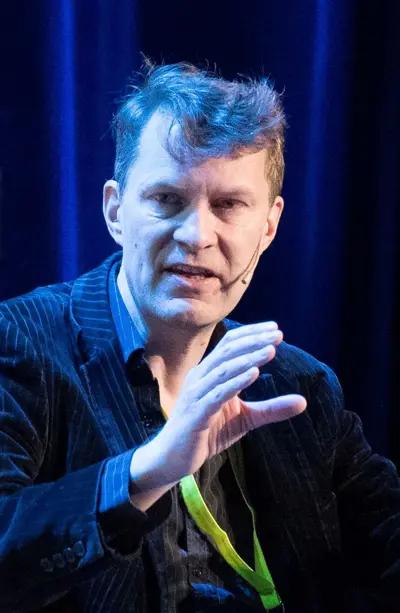
Luke Daniel Harding is a British journalist who is a foreign correspondent for The Guardian. He was based in Russia for The Guardian from 2007 until, returning from a stay in the UK on 5 February 2011, he was refused re-entry to Russia and deported the same day. The Guardian said his expulsion was linked with his critical articles on Russia, a claim denied by the Russian government. After the reversal of the decision on 9 February and the granting of a short-term visa, Harding chose not to seek a further visa extension. His 2011 book Mafia State discusses his experience in Russia and the political system under Vladimir Putin, which he describes as a mafia state.
