Howard Dean Quotes
Not one Republican president has balanced the budget in 34 years. You can not trust Republicans with your money.
Dean, Howard. Presidential Campaign Rally. 2003.


Both the House and the Senate, as they got larger, developed an Appropriations Committee. When the committee assessed a departmental appropriation, they had also the responsibility for all the other departmental budgets. However, many of the members of the Appropriations Committee tended to favor the interests of their particular constituency or the special interests to which they were beholden. Other members had little or no influence. So there was immense pressure during Reconstruction to ‘share’ the appropriations ‘plum’ by creating appropriations subcommittees. However, each particular subcommittee loses the perspective of and interest in the budget as a whole. The process has led to budget imbalance pressure ever since. But Randall, the Speaker of the House warned about exactly what would happen. He had earlier served as Chairman of the Appropriations Committee, and he was exactly right.


By the time the debt ceiling needs a Congressional vote, the money has already been obligated and spent. That is when Congress can control spending. The debt ceiling is ALWAYS increased by Congress when asked otherwise the U. S. would not be able to pay its bills. However, many members of Congress like the fact that every year or so the administration needs their votes so they can extract benefits for their constituents more easily with that leverage.


Automated Teller Machine by which banks dispense cash.

An unusual feature of the American governmental budgeting process is that Congress has passed a law limiting the amount of debt that the United States can maintain. When there is deficit financing, the law limiting the debt has to be changed periodically as the nation approaches the debt limit. Partisan politicians often take advantage of the fact that the debt limit must be passed and hold the passage hostage to obtaining something they want. The reality is that when Congress passed the previous budgets, they determined what the debt would have to be later. So they have already voted to exceed the budget ceiling. But the requirement of doing it in a second forum allows more pressure to be placed on the administration and the other party’s Congress members. While this process is ongoing, many people in the world are worried and often terrorized by the prospect of the debt ceiling not being passed, in which case the United States would have to default on its obligations—not pay interest, contractors, retirements, salaries, etc. Hence the admonition that the debt ceiling should never be a part of the budget negotiating process by most responsible statesmen and women. But the mist partisan of the politicians want to play politics with the debt ceiling precisely because the stakes are so high and they can get both headlines and leverage.

After many years of deficit financing, Clinton finally produced a balanced budget and together with his Secretary, of the Treasury, Robert Rubin, actually developed an economy which was producing a huge annual surplus that would soon eliminate the national debt. However, when George W. Bush replaced Clinton after two terms, Bush was unable to manage the budget any better than the other aspects of the Presidency. He cut taxes dramatically and even after it was clear that the Clinton surplus was squandered, he continued tax reductions and even increased them while increasing government spending creating the biggest government in history and went from our largest surplus to our largest deficit in his 8 years.


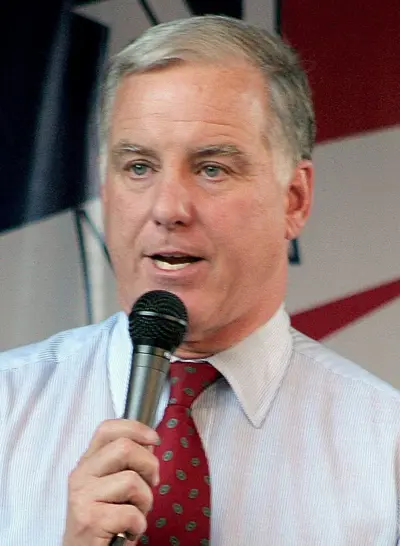
Howard Brush Dean III is an American physician, author, lobbyist, and retired politician who served as Governor of Vermont from 1991 to 2003 and Chair of the Democratic National Committee (DNC) from 2005 to 2009. Dean was a candidate for the Democratic nomination in the 2004 presidential election. His implementation of the fifty-state strategy as head of the DNC is credited with the Democratic victories in the 2006 and 2008 elections. Afterward, he became a political commentator and consultant to McKenna Long & Aldridge, a law and lobbying firm.
