Margaret Cavendish Quotes
Not because they were servants were we so reserved, for many noble persons are forced to serve through necessity, but by reason the vulgar sort of servants are as ill bred as meanly born, giving children ill examples and worse counsel.
Cavendish, Margaret. "A True Relation of my Birth, Breeding, and Life." Nature's Pictures Drawn by Fancie's Pencil to the Life, J. Martin and J. Allestrye, 1656.


Eggleston was an accomplished writer who had served in the Confederate army of the Civil War. 20 year after the war he wrote a series of articles for the prestigious Northern Atlantic Monthly trying to convey the war from the Southerner’s point of view.

Chivalry was a set of rules that regulated the behavior of knights especially as to their behavior in battle. It was the Medieval equivalent of the Geneva Convention. At the time knights fought against knights and peasants fought against peasants. After time the fighting was mixed. Previously, if a knight was subdued by other knights, he would surrender and promise to fight any more and that would be honored. But when a small group of peasants brought down a knight in armor, he could not surrender. He had probably killed other lightly armored peasants who were friends, and the peasants did not trust the knights. So typically, the peasants just killed the fallen knight. Social class determined the concepts of honor, fairness, trust, and chivalry came to an end.


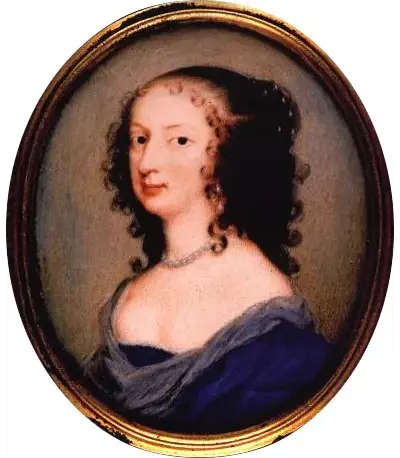
Margaret Lucas Cavendish, Duchess of Newcastle-upon-Tyne was an English philosopher, poet, scientist, fiction-writer, and playwright. Born Margaret Lucas, she was the youngest sister of the royalists Sir John Lucas and Sir Charles Lucas, who owned the manor of St John's Abbey, Colchester. She became an attendant on Queen Henrietta Maria and travelled with her into exile in France, living for a time at the court of the young King Louis XIV. She became the second wife of William Cavendish, 1st Duke of Newcastle-upon-Tyne in 1645, when he was a marquess.
