Shirin Ebadi Quotes
North Americans do not understand that you do not throw down human rights like bombs on the Iraqis.
Ebadi, Shirin. Interview. Democracy Now!, 19 May 2006.


The United States Senate must ratify all treaties before they can become effective. The Senate has been very reluctant to ratify treaties where the U. S. government or any of its citizens could come under the jurisdiction of any legal entity which did not abide by all the rights citizens are guaranteed by the U. S. Constitution. As a result, we do not recognize the World Court and the Treaty of Rome for example. The latter is the one that gives the World Court jurisdiction over a high level official who commits war crimes even in his own country. The result is that many dictators who do not want to be constrained by international law, do not sign the treaty fending off any pressure to do so by pointing to the United States. But Rothkopf and others who agree with him have not yet been able to come up with a mechanism that will assure American Constitutional rights to Americans who might be involved with the World Court and allow the court to punish the dictators who abuse their own population. The French would like their laws and constitution to control. The Russians, theirs. The Chinese, theirs. Every American public official takes an oath to defend The Constitution. That is their primary duty. Foreign policy and punishing international war criminals must take a lower priority.


The possibility of intervention in the affairs of other counties even if there is no U. S. national interest involved, was not new when the George W. Bush administration sent troops to Somalia and Bill Clinton bombed Serbia. There were appeals made “to our sympathies” and there were serious atrocities. But these modern Presidents were just following the policy clearly stated by Theodore Roosevelt in 1904.


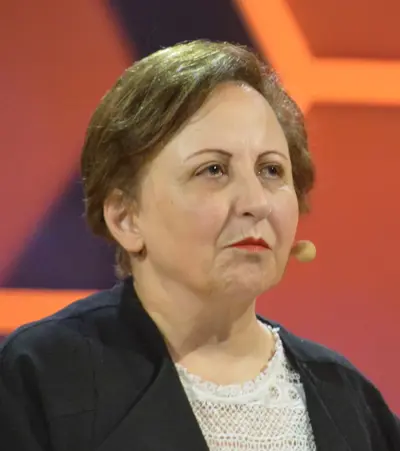
Shirin Ebadi is an Iranian political activist, lawyer, a former judge and human rights activist and founder of Defenders of Human Rights Center in Iran. On 10 October 2003, Ebadi was awarded the Nobel Peace Prize for her significant and pioneering efforts for democracy and human rights, especially women's, children's, and refugee rights.
