John Whitgift Quotes
No presses should be set up or used except those in London and one in the University at Cambridge and one at the University in Oxford. That every printer should within 10 days render an inventory of his implements; upon pain to the delinquent of having the same utterly demolished, and of being imprisoned twelve months … no press should be set up in any obscure place; upon pain to the offender of imprisonment for one year, and also of being disabled forever from using his trade ..:. No new presses should be set up, and that none set up within the six months last past should be used, until their excessive number should have been so reduced as might seem good to the Archbishop of Canterbury and the Bishop of London ; upon pain to the offender of the destruction of his implements, and of imprisonment for a year : That no one should print any book against the meaning of any law of the realm or injunction of her Majesty, nor should any one print any book at all unless the same be first read by the- Archbishop of Canterbury or by, the Bishop of London ; under pain to the printer in either case of being disabled from any practice of printing and of being imprisoned six months: That sellers or binders of any such books should be imprisoned three months: And that the wardens of the Company of Stationers might search for all such books wherever they should have reasonable cause of suspicion, and destroy all presses and other instruments set up or used contrary to the meaning of this decree.
The Archbishop and most of the other prelates of the church saw the tendency for printers to set up more and more printing presses as a great threat to their power and position. When the number of presses was small, the church leaders could read everything that was printed & censor anything that they thought undesirable. However the new technology spread rapidly & there was no way that the church leaders could read & pass on everything that was being printed. They would not dare delegate the right of approval to the local vicars who were might not understand & realize the harm. The solution was simple: Limit the number of presses, restrict them to London & publications could be prescreened. Our Founding Fathers were quite familiar with this decree and others like it. They were intent on making sure that the government would not be able to limit anything involving the freedom of the press & there was yet another example of a religion gaining civil power & abusing it.
John Whitgift, ~1530-1604, English Anglican Archbishop of Canterbury and Member of the Privy Council, Decree issued by the Star Chamber, June 3, 1585
Sourced by: Eigen's Political and Historical Quotations


Commenting on a Supreme Court decision striking down a Lakewood, Ohio ordinance allowing local politicians to control newsracks placed on municipal sidewalks:


In 1735 John Peter Zenger was charged with "publishing several seditious libels" against the English Governor of New York. He was arrested and tried:. The jury acquitted Zenger, striking one of the first American blows against government censorship.

Charles I was tried by Parliament but at the time there was the concept of Royal Impunity and there was no existing crime that he could be charged with despite the murder of many of his citizens. Cooke established the legal precedent making Tyranny a crime. See {624032}.


Fleischer had asked that the White House be given advance notice of any stories the New York Times might be covering in the future dealing with national security. As outlandish as this request may seem given the first amendment, it is a good illustration of the level of concern and panic of the George W. Bush White House who saw the situation as so fearful that that they initiated many constitutionally questionable practices. See {642527} for Fleischer’s request. New York Times has had a practice over the years of holding stories then they were persuaded that damage to the nation or to individuals would ensue as the result of publication at that time. However, the government has at times abused this policy as in the Pentagon Papers Case.


The libel and slander laws in England were then, and are today, dramatically different from those of the United States in two fundamental ways: In America truth is an absolute defense; in England you can’t say true things about people which are personally libelous. Second, in America politicians and public figures are not entitled to a verdict even if the statements are inadvertently or possibly false. Without the Constitutional protections of freedom of speech and freedom of the press, the reputations of people including public figures are given much more weight in England than in America.
The Church exercised the law enforcement and censorship authority in all Catholic countries. Note the offense of saying anything which is “offensive to pious ears”. The particular example that “offended” the pious was that a heretic should not be executed. These were the cultural values of the day.


Note how the second paragraph nullifies the first of the government declares an emergency. This is a trick that is very common in constitutions.
The Interior Ministry has “responsibility” for the press in Saudi Arabia. Licenses are needed to publish a newspaper or magazine. The licenses are granted by the Interior Ministry. Editors keep close to Nayef and censor themselves based on his “guidance.” Wahhabism is a violent and fundamentalist version of Islam whose origins lay in Saudi Arabia. Ibn Taimaya was a 14th century Muslim cleric who preached a particularly radical form of Islam.


Metternich called a conference of the heads of all the German states to deal with what they perceived as a dangerous liberalism enveloping German society. Metternich did not personally draft all the resolutions but he controlled the conclave and all the resolutions which are usually ascribed to him.

A priest, friar or monk with this commission could and did, remove from the custody and control of the local judges, bailiffs and law enforcement officers clerics who had run afoul of the law. At the time the word “clerk” meant any churchman. The principle at the time was that the state could not judge or dispense justice or punishment to members of the church. Only the church could try and convict clerics and they did that persiant to cannon (religious) law. In theory, the bearer of this commission would take custody of an accused criminal who was a churchman, and bring him to the Bishop who would handle the case under Ecclesiastical Law. Often that meant, doing nothing or minor penitence for a crime that could even bring the death penalty under civil law. Historically there has been a major struggle in the West between the churches and civil governments that still goes on to this day in countries like Ireland. In America, the early 21st century saw the Roman Catholic bishops covering up crimes of sexual predation on the part of Priests. Many people were also outraged that the bishops did not report the Priests to the police, but this was unfortunately a throwback to this historical notion that the Church only can deal with the discipline and legal matters involving church personnel or property. Historically, reporting matters like this to civil authorities for handling is only about 200 years old, while the system illustrated by this quotation had been in place for about 1200 years before.

Prior to Germany Declaring War on the United States, there was a small but influential group of American Fascists who were great admirers of Hitler and Mussolini and the “reforms” they had made in Germany and Italy. They saw Germany’s invasion of other European nations as a good think to “reform” Europe. The opposed American support of England and U. S. entry into the war. Their influence waned after Pearl Harbor and Germany declaring war on the U. S. Many of them arose again after WWII ended but they no longer expressed admiration for Hitler and Mussolini—concentrating at that time on anti-communisim. This caused some difficulties for the majority of anti communists who were also anti fascists.


This article was published under the name of “A Lover Of Peace” but is generally attributed to Paine. He was publishing in Pennsylvania which had a large Quaker, pacifist population and Paine was urging them to consider being armed.
The book was very critical of the way capitol punishment is meted out in Singapore. The Singapore Attorney General’s Office then claimed that the book had brought disrespect on the courts of Singapore by being so critical and tried him for “criminal defamation”. Shadrake was fined $30,000 and when he planned on publishing a second edition he was tried again and threatened with Jail. The fundamental problem is that if part of a nation’s government is corrupt, ineffective or incompetent and someone tells that to the public, there will certainly be less respect for the institution. So demanding respect, is tantamount to abandoning freedom of speech in general and criticism of the government in particular,
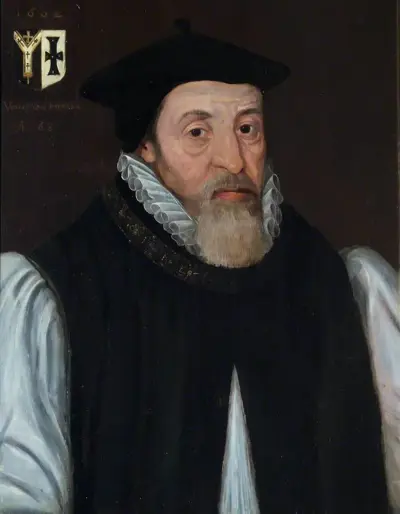
John Whitgift was the Archbishop of Canterbury from 1583 to his death. Noted for his hospitality, he was somewhat ostentatious in his habits, sometimes visiting Canterbury and other towns attended by a retinue of 800 horses. Whitgift's theological views were often controversial.
