William O. Douglas Quotes
No patent medicine was ever put to wider and more varied use than the Fourteenth Amendment.
Douglas, William O. An Almanac of Liberty. Doubleday, 1954.


The call for individual liberty and the right of personal property by clergy is surprising to many. This Cahier was the consensus of the Clergy of Blois in 1789. There were cahiers of several provinces of France—some by the clergy, some by the nobles. What is fascinating is the emergence of many of the pre-Revolutionary French concepts. The example of the American revolution and its principles was known throughout the educated classes of France.


Plessy v. Ferguson was one of the worst Supreme Court Decisions in American history. It held that states could provide and/or mandate racially segregated facilities and institutions so long as they were equal.
What was to become the 14th Amendment was being discussed. Several of the most radical Republicans drafted language that would allow Congress to make any law regarding life, liberty or property, so that they could be sure that the States would not make their laws in a discriminatory manner. However, Hotchkiss and the majority wanted to be sure the laws were not discriminatory but they didn’t want Congress to have the power to make any law regarding life, liberty and property for every state. The current version of the 14th Amendment just prohibited discrimination in laws, not empowering the Federal Government to override the state governments in most important areas.


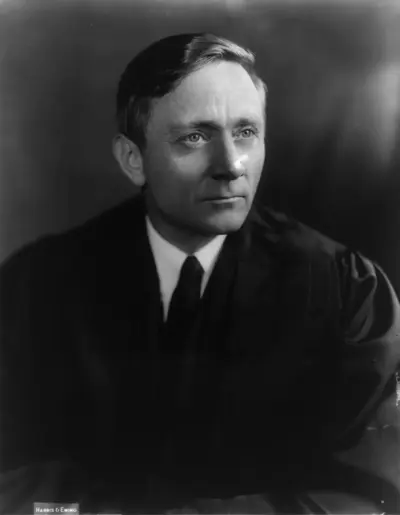
William Orville Douglas was an American jurist and politician who served as an associate justice of the Supreme Court of the United States. Nominated by President Franklin D. Roosevelt, Douglas was confirmed at the age of 40, one of the youngest justices appointed to the court. His term, lasting 36 years and 211 days (1939–75), is the longest in the history of the Supreme Court. In 1975, Time magazine called Douglas "the most doctrinaire and committed civil libertarian ever to sit on the court."
