James A. Farley Quotes
No matter what was written or what was charged, the harmful effect was largely washed away as soon as the reassuring voice of the President of the United States started coming through the ether into the family living-room.
Commenting on the power of radio:
James A. Farley, 1888-1976, Chairman, Democratic National Committee, U. S. Postmaster General, Behind the Ballots, 1938
Sourced by: Eigen's Political and Historical Quotations


ignoring them and letting the pressure build, or denying them and taking the hit

In 1995 the president had agreed with our allies to send troops to support a peace in Bosnia if there was one, but many in Congress attempted to block that possibility.


This is a wonderful historical picture of FDR on his campaign train. Note that the President liked to listen to ideas of many people. Unlike most Presidents he did not have any particular political programs that he advocated in his campaigning. He had no immediate answers to the Great Depression that he had inherited from the Hoover administration. But unlike Hoover, and most Presidents, he was willing to try ideas for which there was no advance evidence of success. If that did not help, he would try something else. He sought ideas from anyone and everyone. His enemies called him a weak leader who had no ideology—no principles but just trying unproven solutions to solve the nation’s critical problems. But it worked and he was elected 4 times—the only President who had served even 3 terms.

The Senator was blaming President Clinton for not stopping the attack on the U. S. Cole as he knew that there were hostile Islamic extremists who were known to have threatened to attack American assets wherever they were. His view was that given that President Clinton should have acted overtly and/or covertly to prevent the attack. This failure for him was an impeachable offence. He argued that George W. Bush was assuming the Presidency and this laxness and incompetence that lead to the death of 17 American sailors would end. And then came 9-11 with the same level of general information and some even more specific information and 3000 Americans were killed. However, unlike Lott, almost no one blamed President Bush’s lack of leadership for the attack on the Pentagon and the World Trade Center. Lott seemed to forget his standard of presidential performance and did not criticize or urge the impeachment of the President of his own party.


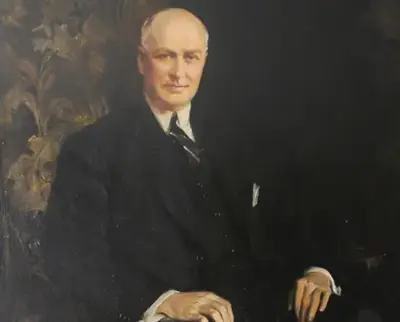
James Aloysius Farley was an American politician from New York. A member of the Democratic Party, he was one of the first Irish Catholic politicians in American history to achieve success on a national level. He simultaneously served as chairman of the New York State Democratic Committee, chairman of the Democratic National Committee, and Postmaster General under the first two administrations of President Franklin Roosevelt. A business executive and dignitary and a Knight of Malta, Farley was commonly referred to as a political kingmaker, and he was responsible for Roosevelt's rise to the presidency. Farley was the campaign manager for New York State politician Alfred E. Smith's 1922 gubernatorial campaign and Roosevelt's 1928 and 1930 gubernatorial campaigns as well as Roosevelt's presidential campaigns of 1932 and 1936. Farley predicted large landslides in both, and revolutionized the use of polling data.
