Eleanor Roosevelt Quotes
No jewelry, particularly no rings, should be worn. Low heeled shoes will allow you to fill your daily stint with less fatigue. Wear goggles and a cap which completely covers your hair, and which has a visor broad enough to warn you when your head is getting too near any part of the machine. Slack suits, jumpers, and dresses should all be loose and comfortable, with no loose tabs, belts, or large buttons to catch in the machinery. Sleeves should either be short, or, if you prefer them long, tight-fitting. These suggestions stress the fact that a woman can still look extremely attractive in her working clothes, but that the object in going to work is to produce as much as possible. When you wear clothes about which you do not have to think, you will give more thought to the work you are doing.
The First Lady was very practical. Although she was a strong advocate of women working in all areas of the labor force, she also realized that there were very few women who had done so before and thus there were few role models for them. So women did not generally know how to dress to keep themselves safe. And if she thought any information was needed, she used her daily syndicated column in many of America’s newspapers to convey that information.
Eleanor Roosevelt, 1884-1962, First Lady (Franklin Delano Roosevelt), U. S. Delegate to the United Nations, Suggestions for women’s dress when they work in factories, Column, My Day, December 31, 1942
Sourced by: Eigen's Political and Historical Quotations


first for women


At the time, the mine owners and operators claimed that they had NO obligations to their workers—not even to ensure a safe mine. There was no OSHA and workers died and were maimed on the job much more frequently than they do today. Many mine owners now accept that they have obligations to the workers, and the rest are required to have responsible and safe working conditions by law and OSHA regulations.


President Harrison had first brought the problem of injured workers having no protection or recourse to public attention {640537} Then Roosevelt’s term created legislation and the Congress passed it. The very conservative Supreme Court had declared the Employers’ Liability Act of 1906 unconstitutional, leaving no recourse of assistance for American railroad employees injured on their job through no fault of their own. Roosevelt was furious and he had the legislation redrafted to get around the Supreme Court objections. and that was passed in 1908 and was not overturned.


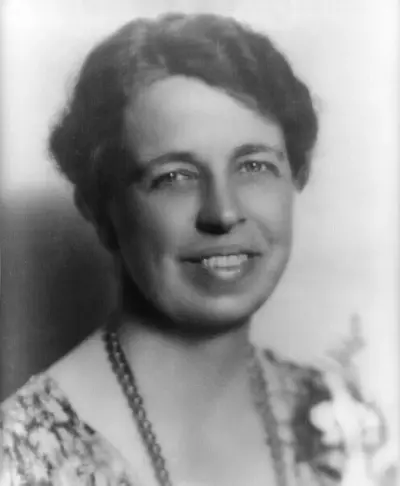
Anna Eleanor Roosevelt was an American political figure, diplomat and activist. She served as the First Lady of the United States from March 4, 1933, to April 12, 1945, during her husband President Franklin D. Roosevelt's four terms in office, making her the longest-serving First Lady of the United States. Roosevelt served as United States Delegate to the United Nations General Assembly from 1945 to 1952. President Harry S. Truman later called her the "First Lady of the World" in tribute to her human rights achievements.
