Edward Bellamy Quotes
[Industrialists] maim and slaughter workers by thousands.
Edward Bellamy, 1850-1898, Economist, Looking Backward, 1888
Sourced by: Eigen's Political and Historical Quotations

As hard as it is to understand today, there were few states with safety laws governing industry. There was no OSHA (Occupational Safety and Health Administration ) or other federal regulation of industrial safety conditions.

At the time, the mine owners and operators claimed that they had NO obligations to their workers—not even to ensure a safe mine. There was no OSHA and workers died and were maimed on the job much more frequently than they do today. Many mine owners now accept that they have obligations to the workers, and the rest are required to have responsible and safe working conditions by law and OSHA regulations.

At the time there was very little such legislation or regulation, and the little there was only occurred after massive lobbying efforts by organized labor. In modern times, often it takes a horrible tragedy to occur before the political will can be mobilized to cope with issues of occupational health and safety.

Most mine safety initiatives have only been passed or implemented after a major mine disaster. This type of inertia, in most fields, is unfortunately typical of legislative calendars and agendas where only a few items are high priority at any one time.


President Harrison had first brought the problem of injured workers having no protection or recourse to public attention {640537} Then Roosevelt’s term created legislation and the Congress passed it. The very conservative Supreme Court had declared the Employers’ Liability Act of 1906 unconstitutional, leaving no recourse of assistance for American railroad employees injured on their job through no fault of their own. Roosevelt was furious and he had the legislation redrafted to get around the Supreme Court objections. and that was passed in 1908 and was not overturned.


She was referring to the high percentage of Rockefeller workers who were killed in industrial accidents with little or no management concern for workplace safety. In addition, she accused Rockefeller (and other very rich employers) of paying such low wages that full time workers lived in abject poverty and suffering the short lifespan that went with poverty then (and even today, but less so.)

In 1991 the Labor Department found major coal mining companies, including Du Pont, USX, Bethlehem Steel and General Dynamics, tampering with dust samples that were sent for federal safety inspection.
Labor reform was a burning issue in most of the industrialized countries of the world. The two areas that legislation was under consideration all over were working hours and child labor. There were no overtime provisions, employers were free to require workers to work 7 days for as many hours as they wanted. There were no limitations on the use of child labor. This is one of the classic conservative oppositions to these reforms. Ironically to us today, those against reform argued that it was disrespectful of the working man to take away his freedom to work whatever hours he so chose, and it was disrespectful of the workers role as a head of family to decide for him when and under what conditions his children could work. Germany at the time was a very dramatic example of the struggle as the Chancellor was opposed to all labor reform and Kaiser Wilhelm II felt that reforms were needed. The two most powerful Germans were split on this issue as were people in most countries.
At the time many workers lived in housing owned by their employer. When the Pullman company had a labor dispute, they not only locked the workers out of their jobs but evicted them from their meager housing.
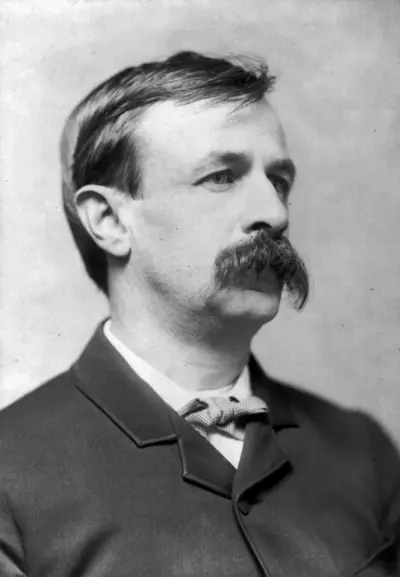
Edward Bellamy was an American author, journalist, and political activist most famous for his utopian novel, Looking Backward. Bellamy's vision of a harmonious future world inspired the formation of numerous "Nationalist Clubs" dedicated to the propagation of Bellamy's political ideas.
