W. Averell Harriman Quotes
No foreign policy will stick unless the American people are behind it. And unless Congress understands it the American people aren't going to understand it.
W. Averell Harriman, 1891-1986, U. S. Ambassador to Russia and to England, New York Governor (Democrat), U.S. Ambassador-at-Large, U. S. Secretary of Commerce, Testimony, Senate Judiciary Committee, 1971
Sourced by: Eigen's Political and Historical Quotations

There was much New England dissatisfaction with the disproportionate power held by the Southern states as a result of counting three-fifths of the slave population for apportioning Congressional seats. In addition they were disproportionately hurt by the War of 1812 and the Embargo on trade with England. Secession was proposed but failed to get a majority. A number of proposed Constitutional amendments were voted upon. The super-majority herein required would have diminished their vulnerability to Southern power.


This was the first exposition of what turned out to be the winning Presidential Campaign strategy in 2004.

President George W. Bush, to justify the invasion of Iraq had told the public that the Iraqi regime was developing nuclear weapons and other weapons of mass destruction, and had participated in the September 11 attack on the United States by assisting Al Qaeda. It turned out that these statements were false. The administration claimed that their error was well intentioned and the result of faulty intelligence. Opponents claimed that the administration officials knew that they were exaggerating and had pressured the intelligence agencies to create intelligence conclusions that supported their story.


Describing the relationship between Congress and the President with respect to the possible military action in the 1991 Iraq Crisis:


At the time the power and prestige of Congress relative to the Presidency , was much greater than it is today. It was McKinley’s successor, Theodore Roosevelt, who began a 20th century trend which led to a reversal of the relationship between the Executive Branch and the Legislative.


This was America’s first Presidential impeachment which occurred just a few years after America’s greatest crisis—the Civil War. It was handled in an orderly, serious manner following the law throughout.
This principle of support of Administration foreign policy (even if opposed) when abroad had an enormous influence on both political parties behavior for almost half a century. It began to fall apart with the hyperpartisanship that the Republican’s deep enmity to Democratic President Bill Clinton, and this was retaliated against be some Democrats during the George W. Bush Presidency. It completely disintegrated with the antipathy many very conservative Republicans had against President Barack Obama in the early 21st century. See {633113} for the Senator’s elaboration on the meaning of the policy.

Many of the leading Republicans viciously attacked President Barack Obama’s character, ability, and motives during the Ukraine-Russia Crisis. The irony if the attacks on the President is that un general the Republicans agreed with the actual policies and statements of the President on his dealing with the crisis but they were vicious in describing his as “Weak”, “Feckless”, “Not to be feared or taken seriously”. They wanted the President to be even tougher than he was and yet they told the world and the Russian leaders that he was “weak and could be pushed around,” thus undermining the President’s credibility and his likely success in implementing the tactics they wanted.
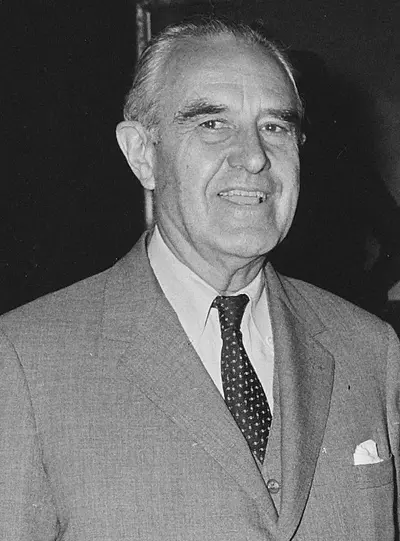
William Averell Harriman, better known as Averell Harriman, was an American Democratic politician, businessman, and diplomat. The son of railroad baron E. H. Harriman, he served as Secretary of Commerce under President Harry S. Truman, and later as the 48th Governor of New York. He was a candidate for the Democratic presidential nomination in 1952 and 1956, as well as a core member of the group of foreign policy elders known as "The Wise Men".
