George Schultz Quotes
Nixon railed against the CIA and their lousy intelligence.
George P. Shultz, U. S. Secretary of State (Republican) Nixon: An Oral History of His Presidency, 1994
Sourced by: Eigen's Political and Historical Quotations

Just as the brief was received, Kissinger received a Cable from the American Embassy in Cyprus stating that the Greek forces had moved in Cyprus and decimated the Cypriot forces and burned the Presidential Palace. Nixon was furious at the CIA which based their entire brief on one agent talking to the Greek dictator in Greece and had no agents who could report on what everyone in Cyprus could see. {634509}, {634503} and {634502} for examples of Nixon flaming the CIA. This was one of the reasons he came down on them.


Bill Casey had an individual ideology of the world and being a strong administrator imposed that on most of intelligence analyses that the agency did during his tenure.


Precursor to CIA. During WWII Donovan’s OSS, the FBI and the State Department had the three civilian intelligence organizations while each of the 4 Armed Services had their own intelligence services. Rarely did any of these 7 organizations communicate with any of the others. In the case of the OSS, the FBI and the military services tended to try and obstruct many of their operations. This was the first call for what became the CIA.


The scandals of the past of CIA lies to Congress and the President, mistakes they had made, and a raft of illegal activities, had eroded support for the agency. We still had the NSA and the Military Intelligence Agencies which had not been involved in the CIA scandals.
He was not referring to economic corruption but intellectual and moral corruption. Regan who appointed many excellent key officials picked a very unfortunate choice to lead the CIA. William J. Casey had many faults and weaknesses—See {637472}, {636743} and {637469}. But the worst of his damage was imposing his ideology on the agency and having the intelligence analysts shape their intellectual product to conform with a particular world, political, and religious view. See {634408}. This became acceptable and as future administrations took power their ideologies were considered by the CIA professionals and reports were edited and shaped accordingly. Reform was instituted by some of the future CIA directors but there were precedents from the Casey days for years. One particularly bad manifestation of this intellectual corruption occurred when Vice President Richard Cheney imposed a neocon world view on the agency with a pliant CIA director and the agency gave the President a totally inaccurate assessment of Iraq nuclear capability and intention which triggered the disastrous Iraq war, made all the worse when there were not only no nuclear weapons in Iraq as had been reported, but there was not even a single laboratory trying to develop nuclear weapons or even nuclear power.


Harriman was sent to Tokyo to meet with the general.


This was meant as a criticism of Webster, but must people saw it as a compliment. What Clarridge and other old hands at the CIA could never get straight was that they were supposed to break the other countries’ laws but not the laws of the United States. They were supposed to lie to other countries, but not to our President and Congress. This has been a constant problem for United States intelligence agencies. Some scholars of espionage believe that a good spy or spy master lies so often that it is part of his nature to do so as well as break laws. Psychologically it is difficult for them not to lie to anyone and they have little respect for laws. Webster fired Clarridge when Webster reformed the CIA but in the process he alienated most of the “veterans”.


Agree resigned from the CIA in protest to its political positions.


Nixon however turned out to be very dishonest with the Watergate scandal allowing the public to see and hear what Nixon was really like. He was the only American President who resigned, as he did that to save himself from being impeached and tried for various fenonies he committed. Vidal had his number. However, Nixon was not a crook in the usual sense of the word. His violations of law and ethics did not enrich him fiscally. His corruption was the drive and mania for power and control.
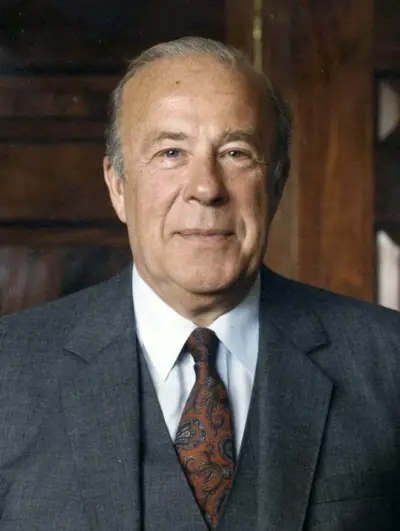
- Born: December 13, 1920
- Died: February 6, 2021
- Nationality: American
- Profession: Public Servant
George Pratt Shultz was an American economist, diplomat, and businessman. He served in various positions under three different Republican presidents and is one of only two people to have held four different Cabinet-level posts. Shultz played a major role in shaping the foreign policy of the Ronald Reagan administration. From 1974 to 1982, he was an executive of the Bechtel Group, an engineering and services company. In the 2010s, Shultz was a prominent figure in the scandal of the biotech firm Theranos, continuing to support it as a board member in the face of mounting evidence of fraud.
