Philip Emeagwali Quotes
Nigeria is a West African nation of over 100 million energetic people. It is endowed with lots of natural resources but lacks human resources.
Emeagwali, Philip. "How Do We Reverse the Brain Drain?" Emeagwali.com, Philip Emeagwali, 24 Oct. 2003, www.emeagwali.com.


The relationship of population increase economic growth is a critical one. If an underdeveloped country manages to have a 3% annual economic growth rate and also has a 3.2% population growth, at the end of the year, the average person is actually poorer than he was the previous year. South Korea, China, Thailand and India implemented successful population control and family planning programs before they were able to take advantage of economic development. To modernize, the country must be able to have a surplus of funds which can be invested in roads, schools, hospitals, and other facilities which can produce even more growth later. Too many new mouths to feed, clothe and care for can be a barrier to development even if the economy is reasonably good.


While Peres and many others think that the Arab nations can become developed countries, there are major barriers in the way. One is oil. No country that has had a great deal of oil has ever developed. Then there is education. Israel’s technological success requires a very high level of education in secular subjects which no Arab nation provides. The Western cultural values of inquiry, freedom of thought, individuality are were in large part developed from the traditional Jewish values. The Muslims had these at the early 2nd millineum. But political and religious forces since then, have created contemporary Arab cultures whose vaues are in many ways antithetical to modern technological development.


He was Governor-General of Korea when he made this statement.

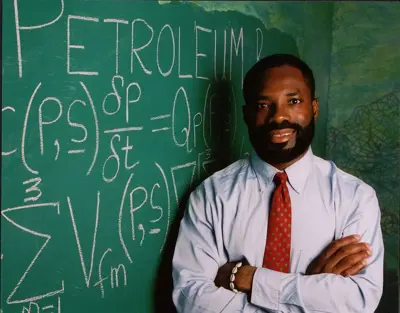
Philip Emeagwali is a Nigerian computer scientist. He won the 1989 Gordon Bell Prize for price-performance in high-performance computing applications, in an oil reservoir modeling calculation using a novel mathematical formulation and implementation. He is known for making controversial claims about his achievements that are disputed by the scientific community.
