George Rogers Clark Quotes
Never was a person more mortified than I was at this time, to see so fair an opportunity to push a victory; Detroit lost for want of a few men.
Clark, George Rogers. George Rogers Clark Papers 1771-1781. Edited by James Alton James, Illinois State Historical Library, 1912, p. 143.


America had more than one ancient exemplar of the problem of the Iraq War. The great Carthaginian General Hannibal was brilliant in war but tended to lose the benefits of victory by lack of planning and poor administration and geopolitical strategy. He could never “win the peace.” See {589454} for his view of the two phases of conflict.

While running for office he was trying to win the support of Republcian Conservatives who were very unhappyt with their percieved lack of progress in fighting ISIS. However, this was insulting to many military people--especiually since ISIS was being deprived of they sources of funding and oil trade, their leaders were being killed at a rapid rate, and they were losign most of their territory. After he won the Presidency, on the very night of his inaguration he then flip flopped and paraised the general leadship of the military. While most politicans had a certain degree of hypocricy, Trump could make totally contrdictory statements without any embarassment. See Quote 644331..


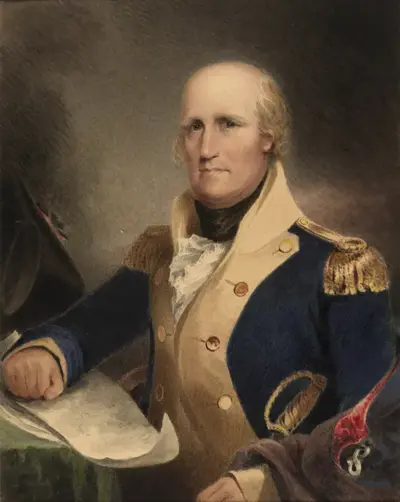
George Rogers Clark was an American surveyor, soldier, and militia officer from Virginia who became the highest-ranking American patriot military officer on the northwestern frontier during the American Revolutionary War. He served as leader of the militia in Kentucky (then part of Virginia) throughout much of the war. He is best known for his celebrated captures of Kaskaskia (1778) and Vincennes (1779) during the Illinois Campaign, which greatly weakened British influence in the Northwest Territory. The British ceded the entire Northwest Territory to the United States in the 1783 Treaty of Paris, and Clark has often been hailed as the "Conqueror of the Old Northwest".
