Nicolaus Copernicus Quotes
Nations are not ruined by one act of violence, but gradually and in an almost imperceptible manner by the depreciation of their circulating currency, through its excessive quantity.
Copernicus, Nicolaus. Minor Works. Translated by Edward Rosen, Johns Hopkins University Press, 1992, p. 176.


The exact phrase has not been found in Gresham's writings but the idea appeared in a 1558 letter to Queen Elizabeth I. The expression has come to be known as Gresham's Law.


While devaluation may have been intended to have the effect of stimulating exports and inhibiting imports, many countries have populations which feel “cheapened” by the process—that they are worth less as laborers and their raw materials are valued less in the eyes of the world.

President Richard Nixon, a conservative Republican did not agree with this view as it was he who led America to abandon the gold standard to back its money.

This is the first major history of banks written in the United States.

“Pegged” exchange rates are a country’s money where the Government sets the value of the money in terms of some other currency—usually American dollars. The advantage of a pegged currency is that it is stable and does not fluctuate day to day. The disadvantage is that people realize that the value is artificial and other countries will not accept the pegged currency. Worse natives try and get as many dollars as they can because the fear that the Government will devalue and change the rate of exchange of the pegged currency.


Perry was an extremist politician who commonly exaggerated things to the delight of his supporters and the chagrin of his opponents.


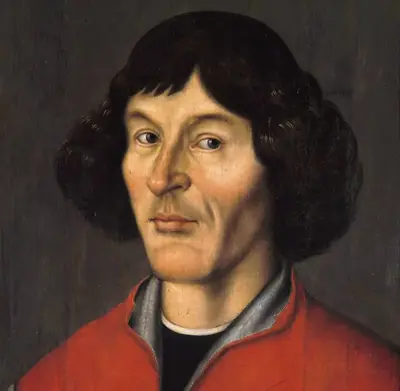
Nicolaus Copernicus was a Renaissance-era mathematician, astronomer, and Catholic canon who formulated a model of the universe that placed the Sun rather than Earth at its center. In all likelihood, Copernicus developed his model independently of Aristarchus of Samos, an ancient Greek astronomer who had formulated such a model some eighteen centuries earlier.
