Mustafa Kemal Ataturk Quotes
National sovereignty should be supported by financial independence. The only power that will propel us to this goal is the economy. No matter how mighty they are, political and military victories cannot endure unless they are crowned by economic triumphs.
Kemal Ataturk, 1881-1938, 1st President and founder of the Turkish Republic, Statement on the Criticality of Economic Strength
Sourced by: Eigen's Political and Historical Quotations


This was another of the views of the fascists that drove much of their policies and practices but are demonstrably untrue. The world has many countries that have little power or world respect and yet the people are very happy. Luxemburg, Monaco, Finland and the Baltic Countries are just a few of the counter-examples.


In 1964, after the newly elected Labour Government announced its new policies and budget, the financiers and speculators who control the international money markets thought the new budget and policies ill-advised. The made their concerns known to the Governor of the Bank of England who in turn recommended to the new Prime Minister that he cut the budget drastically and adopt a new more conservative set of economic policies. The Prime Minister was shocked that a non-elected small group of men—mostly not even British, were trying to reverse a set of policies that the voters in a democracy had elected. However, he was more shocked when he discovered that if he didn’t “obey” the financiers could act in concert, attack the British Pound, dramatically increase the interest rates the government would have to pay to borrow short term money, and ruin the British economy. Wilson had to comply. In America we refer to this situation more delicately by saying that “the markets will not react well to one proposal or another”. Our politicians intimidate themselves. The only way a democracy can really have control over its own policies and budgets, is to not be in debt to anyone.


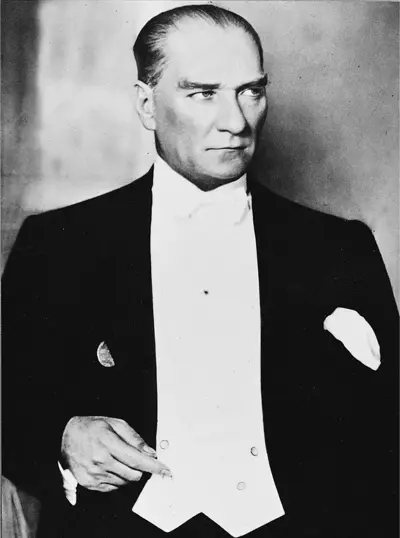
Kemal Atatürk was a Turkish field marshal, revolutionary statesman, author, and the founding father of the Republic of Turkey, serving as its first president from 1923 until his death in 1938. He undertook sweeping progressive reforms, which modernized Turkey into a secular, industrial nation. Ideologically a secularist and nationalist, his policies and theories became known as Kemalism. Due to his military and political accomplishments, Atatürk is regarded as one of the most important political leaders of the 20th century.
