William Lyon Mackenzie King Quotes
Once a nation parts with the control of its credit, it matters not who makes the laws.


This objective finally reached its peak in the Nixon administration when the U. S. went off the gold standard. 75 Years after FDR tried to make the U. S. dollar more resilient, America had been so successful that many foreign governments having the same problem of little or no control over their currency, have pegged their currency to the U. S. dollar, thus gaining our stability.

The legislation creating the Federal Reserve Board was then being debated. A few days later it passed despite reservations from Lodge and others. The powers relegated to the Federal Reserve Board have been debated ever since.


At the time there was no national paper money. Individual banks printed their own and paper money was not accepted or heavily discounted most Americans. Most opposed a tender law that required paper money to be accepted in commerce.

See {583710} for his grandchild’s variation.


The alternative would have been for the colonies to borrow English money at high interest rates and use that. Or use money from private banks (which occurred later.) Many conservatives are today a little shocked that some of the American Colonies just printed money with no backing but it worked—at least at the local level. A Boston Bank for example, would take a large commission for a Bostonian to convert Pennsylvania money into Massachusetts money. So it was not a very good system for trade between colonies and International trade. But English money was used for that. The colonists pragmatically got the “best of both worlds” and paid as little interest as they needed to. This system is essentially what we use today on a national scale with no gold or silver backing of the money.


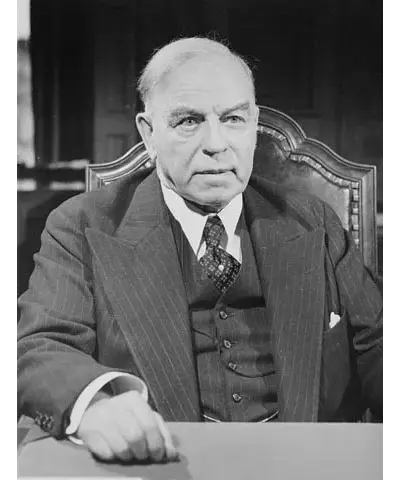
William Lyon Mackenzie King OM CMG PC, commonly known as Mackenzie King, was a Canadian statesman and politician who served as the tenth prime minister of Canada for three non-consecutive terms from 1921–1926, 1926–1930 and 1935–1948. A Liberal, he was the dominant politician in Canada during the interwar period from the 1920s through the 1940s. He is best known for his leadership of Canada throughout the Second World War (1939–1945) when he mobilized Canadian money, supplies and volunteers to support Britain while boosting the economy and maintaining morale on the home front. With a total of 21 years and 154 days in office, he remains the longest-serving prime minister in Canadian history.
