Karl Marx Quotes
My object in life is to dethrone God and destroy capitalism.


The first Russian Revolutionary Newspaper for Workers. Volodarsky shot to the top of the early revolutionary leadership. Most of the early Russian leaders were intellectuals and theoreticians. Valodarsky had much organizing experience and could communicate well with workers having been active in the Ladies Garment Workers Union and the American Socialist Party. His practical American approach was just what was needed and he became a key member of the leadership. He was so instrumental in the Bolshevik leadership that he was targeted for assassination along with Lenin and Uritsky. Lenin was only wounded. The others died. Goldstein was only 27 years old. Russia named bridges, schools and warships after him.

At the time, Capetown was under the control of the Dutch East India Company which had recruited Gordon from Scotland. There was a wave of liberality following the Enlightenment, the American Revolution, and the very vocal English, anti-slavery, reformers. The Dutch were concerned mainly with making money, and that they thought that meant stability and the status quo. Gordon was their strong spokesman on this. Like American Southern slave owners, Gordon read the Bible as God endorsing slavery and the inferiority of Blacks. Thus, reformers did not "believe in God any more".

He was elected to Parliament while in jail and never took his seat as he died of a hunger strike in jail.


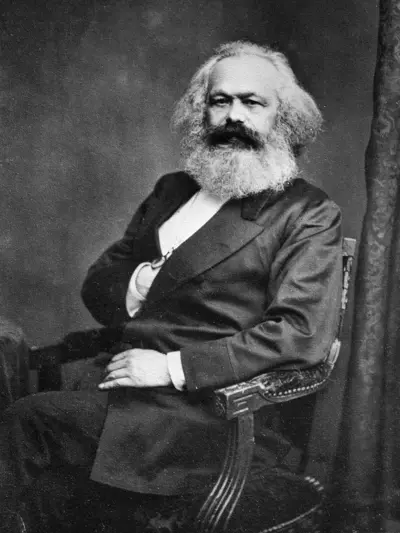
Karl Heinrich Marx was a German philosopher, economist, historian, sociologist, political theorist, journalist and socialist revolutionary. Born in Trier, Germany, Marx studied law and philosophy at university. He married Jenny von Westphalen in 1843. Due to his political publications, Marx became stateless and lived in exile with his wife and children in London for decades, where he continued to develop his thought in collaboration with German thinker Friedrich Engels and publish his writings, researching in the reading room of the British Museum. His best-known titles are the 1848 pamphlet The Communist Manifesto and the three-volume Das Kapital (1867–1883). Marx's political and philosophical thought had enormous influence on subsequent intellectual, economic and political history. His name has been used as an adjective, a noun, and a school of social theory.
