Rob Lowe Quotes
My greatest regret at the passing of America-hating strongman Hugo Chavez is that he didn't live long enough to party with Dennis Rodman.
Lowe, Rob (@RobLowe). "My greatest regret at the passing of America-hating strongman Hugo Chavez is that he didn't live long enough to party with Dennis Rodman." Twitter, 5 Mar. 2013.


Misha Saakashvili, the President of Georgia, the ex-Soviet State, had a good bit of support in American political circles and decided to start a military conflict with Russia attacking a disputed area whose people had rejected Georgia and preferred the Russian affiliation and control. He was confident that the US would protect him from major retaliation. The Russians first moved troops into the attacked area and then started attacking Georgia military assets. Rice and the Russian Foreign minister were negotiating a cease fire on which they agreed to details and were going to impose them on Georgia. However, Lavrov demanded that Georgia President Saakashvili be deposed. Either nation had the power to do this, and both had in many past instances deposed or overthrown the leaders of other nations—democratically elected or not. This quote is very interesting because in this particular case the United States was stating its idealistic policy and not its “real-politic: that it exhibited in helping to bring down and depose democratically elected in Iran, Chile, Vietnam, Venezuela, Haiti, and others. Ironically, there were many in the US who wanted Saakashvili deposed for unilaterally starting a military conflict Russia that had to involve the U. S.

The 40 Committee was a secret committee of officials to deal with major national security covert operations possibilities. Chile had democratically elected Salvador Allende, a strong socialist, as President. He then, as he had promised in his campaign, begun to nationalize mining and other heavy industry and nationalized the very large farms. Kissinger and some others thought that Allende might probably transform Chile to communist state. The committee was discussing whether or not the United States should, via covert operations, try and destabilize or overthrow the Allende government. There was a strong minority aristocracy of the wealthy who would definitely support such an activity. Kissinger argued for intervention and some others observed that Allende had been fairly elected as a leftist by the people. Kissinger made this famous statement, and America covertly though the CIA worked with the Chilean right wing and fascists to overthrow Allende. The military, having been given the “green light” started attacking the Presidential Palace. Allende made a radio speech to the nation. A few hours later, the military seized the palace and reported that Allende had committed suicide.
Kissinger stating that the US should “correct” the election “mistakes” of other countries was of course Top Secret and the official US position was to support the right of any people to elect their preferred leaders. Normally, the public would never have seen the transcript of the meeting until many decades had passed but part of the transcript found their way to a manuscript of a book about the CIA. That agency went to the courts to block the publication and Kissinger’s statement. However, although the quote was removed from the book, enough people had now seen it, and the quote was leaked.
The quote is historically important for the real story of what really happened in Chile as General Pinochet who seized power turned out to be guilty of Crimes Against Humanity and Allende is today a national hero and martyr. In addition, it is a wonderful example of “overclassification”. After the action was completed, why should the American Public not know that its Secretary of State did not believe in democratic elections if the people would elect communists? --especially when the official stated policy he was presenting was just the opposite. The argument faded when the Watergate Scandal broke and consumed America’s attention.


Bunch was the undersecretary-general of the United Nations who won the Nobel Peace Prize for his mediation efforts in the Middle East. Archie Roosevelt and his extreme right wing associates thought that anyone who worked in the UN was a communist and had no respect for the Norwegian Nobel Prize Committee. In the spirit of Archie Roosevelt’s father, the Theodore Roosevelt made the award to Buche and ignored Archie’s slanderous attack. Surprising to most people who know of President Theodore Roosevelt’s general liberal views, his 4th son was an ultraconservative who founded and joined racist, anti-Semitic, right wing organizations, and to the distress of many in the family and without lent his name to many of the most extreme right wing causes and organizations.
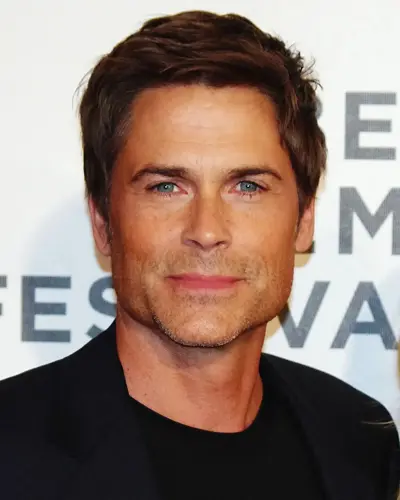
Robert Hepler Lowe is an American actor, producer, and director. He made his acting debut at the age of 15 with ABC's short-lived sitcom A New Kind of Family (1979–1980). Following numerous television roles in the early 1980s, he came to prominence as a teen idol and member of the Brat Pack with roles in films like The Outsiders (1983), Class (1983), The Hotel New Hampshire (1984), Oxford Blues (1984), St. Elmo's Fire (1985), About Last Night... (1986), and Square Dance (1987). The success of these films established him as a Hollywood star.
