Fyodor Dostoevsky Quotes
My God, but what do I care about the laws of nature and arithmatic if for some reason these laws and two times two is four are not to my liking?
Dostoevsky, Fyodor. Notes from Underground. Translated by Richard Pevear and Larissa Volokhonsky, Vintage Books, 1993, p. 12.

This is a modern summary of the philosophy of Benedict Spinoza who developed the modern philosophical foundation of science and scientific thinking. When the authorities are clerics and religious leaders, their authority gets undermined which is why the Jews, Christians, and Muslims all excommunicated Spinoza. For the scientists, they themselves are to be rejected as determiners of knowledge and truth so they tend to do poorly in political disputes because the good scientists would never assert a belief that the politicians should listen to them just because they are great scientists and they “know.” It is the ideologues and junk scientists who are sure of their testimony and can advise with certainty. See linked quote(s).


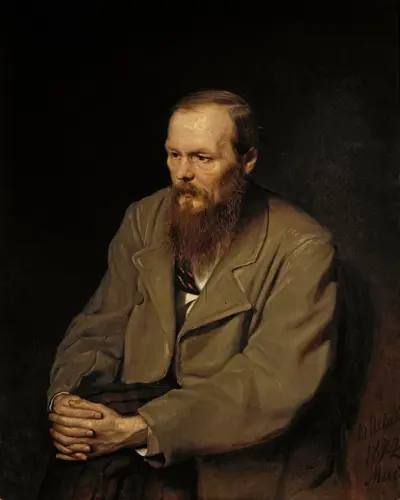
Fyodor Mikhailovich Dostoevsky, sometimes transliterated as Dostoyevsky, was a Russian novelist, philosopher, short story writer, essayist, and journalist. Dostoevsky's literary works explore human psychology in the troubled political, social, and spiritual atmospheres of 19th-century Russia, and engage with a variety of philosophical and religious themes. His most acclaimed works include Crime and Punishment (1866), The Idiot (1869), Demons (1872), and The Brothers Karamazov (1880). Dostoevsky's body of works consists of 12 novels, four novellas, 16 short stories, and numerous other works. Many literary critics rate him as one of the greatest psychological novelists in world literature. His 1864 novel Notes from Underground is considered to be one of the first works of existentialist literature.
