Erik Larson Quotes
My favorite zone is from 1890 -1915, that zone that spans the overlap of the so-called Gilded Age and the Progressive Era. People had such a boundless sense of optimism; They felt they could do anything they wanted to do, and they went out and tried to do it.
Larson, Erik. "Author Interview." BookBrowse, 2003.


Julius Jacob von Haynau, 1786–1853, was a vicious Austrian General who had committed many atrocities in Italy and Hungary which today would be considered War Crimes and Crimes Against Humanity. He even had women publicly flogged who were heard saying anything sympathetic about the freedom fighters who the General suppressed brutally. Haynau was known and despised by military men the world over. So many of the Confederate and Union officers understood the insult. General Butler was not accused of atrocities of the usual type, but as the Commanding Union General of New Orleans, he was not very chivalrous to the Southern women of the city who were particularly effective in harassing the Union Officers and men. For example, the women would store the urine and feces of the chamber pots of the house and wait until Union soldiers, preferably officers, walked by and unloaded the waste on them from upper story windows. Butler ordered that women who harassed the soldiers could be “treated like common prostitutes.” Butler also turned a blind eye to the looting of the activist women’s silver and other valuables.


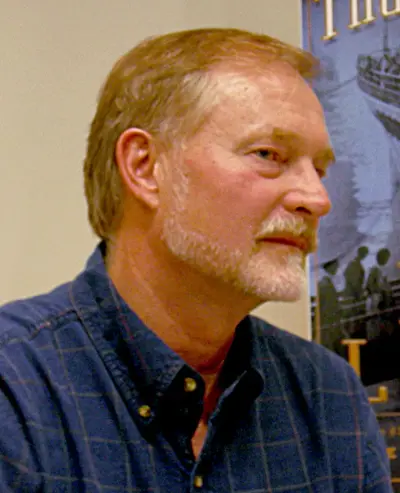
Erik Larson is an American journalist and author of nonfiction books. He has written a number of bestsellers, including The Devil in the White City (2003), about the 1893 World's Columbian Exposition in Chicago and a series of murders by H. H. Holmes that were committed in the city around the time of the Fair. The Devil in the White City won the 2004 Edgar Award in the Best Fact Crime category, among other awards.
