Charlton Heston Quotes
My appearance qualifies me for historic characterizations, going back to the year one.
Heston, Charlton. The Actor's Life: Journals, 1956-1976. E.P. Dutton, 1978.


Note that this is a tribal right and not an individual one. When whites first came to America, the Iroquois, were the most sophisticated Native Americans. They were actually a confederation of 5 different tribes each of which was composed if many clans. Although fierce warriors, they had agreed not to fight each other and to assist if any were attacked. They developed a strong agricultural base, to go with the fishing and hunting, and their confederation were very aggressive and sophisticated traders taking them far from their upstate New York “capitol.” Their governmental structure was quite sophisticated with an elaborate, formal, system of checks and balances, multi-cameral legislatures that recognized numbers of citizens, power and wealth, and even cultural traditions. They were literate, capitalistic and globalistic in that they wanted to trade with all. They had written laws, and women had a role that was unique in world history in that only women owned property in a matrilineal society. Further, it was only the Clan Mothers who voted for the 50 Sachems (~Senators)—but their selections had to be accepted by the people they represented. Ironically the descendants of the Iroquois who remained in New York became a very successful Native American group. In the 2000 census, the average Indian in New York State earned the same income as the average White with no Indian gambling money.


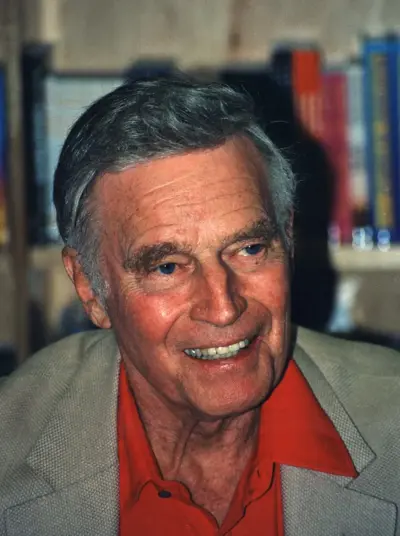
Charlton Heston was an American actor and political activist. As a Hollywood star, he appeared in almost 100 films over the course of 60 years. He played Moses in the epic film The Ten Commandments (1956), for which he received his first nomination for the Golden Globe Award for Best Actor – Motion Picture Drama. He also starred in The Greatest Show on Earth (1952), Secret of the Incas (1954), Touch of Evil (1958) with Orson Welles, The Big Country (1958), Ben-Hur (1959), for which he won the Oscar for Best Actor, El Cid (1961), The Greatest Story Ever Told (1965), Planet of the Apes (1968), The Omega Man (1971) and Soylent Green (1973).
